How MarQi Cloud Handles High-Traffic Events Without Performance Degradation
June 28, 2026
MarQi Cloud for Agencies: Host 50+ Client Sites Efficiently
June 29, 2026
Ultimate Guide to Setting Up Auto-Scaling on MarQi Cloud Without Code
In today’s fast-paced digital landscape, businesses are increasingly turning to cloud solutions to ensure that their infrastructure can scale efficiently and adapt to fluctuating workloads. Among various cloud service providers, MarQi Cloud stands out for its robust hybrid cloud solutions and enterprise-grade infrastructure. This comprehensive guide will walk you through the process of setting up auto-scaling on MarQi Cloud without requiring any coding skills, allowing you to optimize resource allocation and enhance performance seamlessly. By the end of this article, you will have a clear understanding of how to implement auto-scaling effectively, ensuring your applications remain responsive and cost-effective.
Understanding Auto-Scaling
Auto-scaling is a cloud computing feature that automatically adjusts the amount of computational resources available to your applications based on current demand. Instead of manually provisioning or de-provisioning resources, auto-scaling dynamically allocates resources in real-time, ensuring optimal performance during peak loads and cost savings during low demand periods. This capability is crucial for businesses that experience variable workloads, as it enhances performance and ensures high availability.
Benefits of Auto-Scaling on MarQi Cloud
Utilizing auto-scaling on MarQi Cloud offers numerous advantages:
- Cost Efficiency: Automatically adjust resources based on demand, reducing unnecessary costs associated with over-provisioning.
- Performance Optimization: Ensure that applications remain responsive and perform optimally during traffic spikes.
- High Availability: Maintain application availability by automatically adding resources during peak loads.
- Scalability: Easily scale resources up or down without requiring technical expertise or coding.
- Enhanced User Experience: Provide a seamless experience for users by ensuring that applications remain responsive, regardless of traffic fluctuations.
How to Set Up Auto-Scaling on MarQi Cloud
Setting up auto-scaling on MarQi Cloud is a straightforward process that can be accomplished through the MarQi Cloud management portal. Below, we’ll outline step-by-step instructions to help you achieve this without touching any code.
Step 1: Log in to the MarQi Cloud Management Portal
Begin by logging into your MarQi Cloud account. If you do not have an account, you can easily create one by visiting the Getting Started page.
Step 2: Navigate to the Auto-Scaling Section
Once logged in, navigate to the Auto-Scaling section within the management portal. This area allows you to configure auto-scaling settings for your resources.
Step 3: Define Your Scaling Policies
In this step, you will define the scaling policies that will govern how and when your resources will be scaled. Consider the following:
- Scaling Triggers: These are the metrics that will trigger scaling actions. Common metrics include CPU utilization, memory usage, and network traffic.
- Scaling Actions: Determine what actions to take when a trigger is met. For instance, you may choose to add or remove instances based on specific thresholds.
- Cooldown Periods: Implement cooldown periods to prevent rapid scaling actions, which can lead to resource instability.
Step 4: Set Minimum and Maximum Resource Limits
Specify the minimum and maximum number of resources that can be allocated. This ensures that your applications have enough resources to handle increased demand without overspending. For example, if your application usually runs well with 2-4 instances, set the minimum to 2 and the maximum to 10.
Step 5: Review and Save Your Configuration
Once you have defined your scaling policies and resource limits, review your configuration to ensure everything is set correctly. After confirming, save your settings.
Step 6: Monitor Auto-Scaling Performance
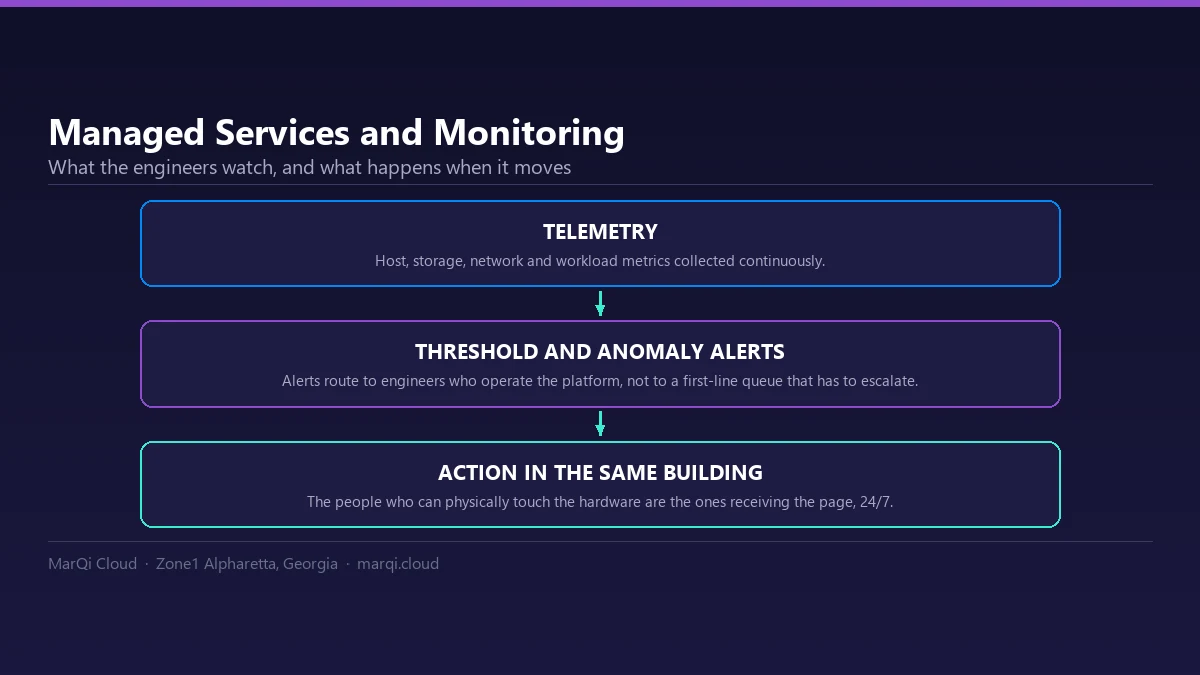
After setting up auto-scaling, it’s crucial to monitor its performance. Use the MarQi Cloud monitoring tools to track performance metrics and ensure that your scaling policies are effective. You can access monitoring tools through the Status & Monitoring page.
Monitoring and Managing Auto-Scaling
Once you have set up auto-scaling, continuous monitoring is essential to ensure that it operates effectively. Here are some tips for managing your auto-scaling setup:
- Regularly Review Metrics: Keep an eye on key performance metrics to determine whether your scaling policies are adequate. If you notice that resources are consistently under or over-utilized, consider adjusting your policies.
- Test Your Configuration: Periodically test your auto-scaling configuration to ensure that it responds appropriately to changes in demand. Simulate traffic spikes and observe how your system reacts.
- Adjust Policies as Needed: As your business grows and your application evolves, your scaling needs may change. Regularly revisit your scaling policies to ensure they align with your current requirements.
Common Issues and Troubleshooting
While setting up auto-scaling on MarQi Cloud is generally straightforward, you may encounter some common issues. Here are potential problems and solutions:
- Auto-Scaling Not Triggering: If your auto-scaling is not triggering as expected, double-check your scaling policies and ensure that the defined metrics are being monitored accurately.
- Resource Limits Exceeded: If you find that your maximum resource limits are being reached frequently, consider increasing the maximum limit to accommodate higher traffic.
- Performance Issues During Scaling: If you experience performance issues during scaling events, review your cooldown periods and adjust them to allow for a smoother transition.
Conclusion
Setting up auto-scaling on MarQi Cloud without touching code is not only possible but also essential for businesses looking to optimize their cloud resources effectively. By following the steps outlined in this guide, you can ensure that your applications remain responsive during peak traffic and cost-efficient during low demand periods. For further assistance, consider exploring our documentation or reaching out to our support team.
Frequently Asked Questions
What is auto-scaling?
Auto-scaling is a cloud computing feature that automatically adjusts the number of active resources based on current demand, ensuring optimal performance and cost efficiency.
How does auto-scaling work on MarQi Cloud?
On MarQi Cloud, auto-scaling works by monitoring predefined metrics, such as CPU utilization, to determine when to add or remove resources automatically.
Do I need coding skills to set up auto-scaling on MarQi Cloud?
No, you can set up auto-scaling on MarQi Cloud without any coding skills using the management portal.
What metrics can I use to trigger auto-scaling?
You can use metrics such as CPU utilization, memory usage, and network traffic to trigger auto-scaling actions.
Can I set minimum and maximum resource limits for auto-scaling?
Yes, you can define minimum and maximum resource limits to ensure your applications remain cost-effective and responsive.
How can I monitor the performance of auto-scaling?
You can monitor auto-scaling performance using the MarQi Cloud monitoring tools available in the management portal.
What should I do if auto-scaling is not triggering?
If auto-scaling is not triggering, check your scaling policies and ensure that the defined metrics are being monitored accurately.
Where can I find additional resources for MarQi Cloud?
You can find additional resources, including documentation and support, on the MarQi Cloud documentation page.