Flexible Pricing Models: Aligning Infrastructure Costs with Business Growth at MarQi Cloud
July 11, 2026
How to Architect a Fault-Tolerant Cloud Environment for Business Continuity
July 12, 2026
Why US-Based Cloud Infrastructure Matters for Data Sovereignty and Compliance
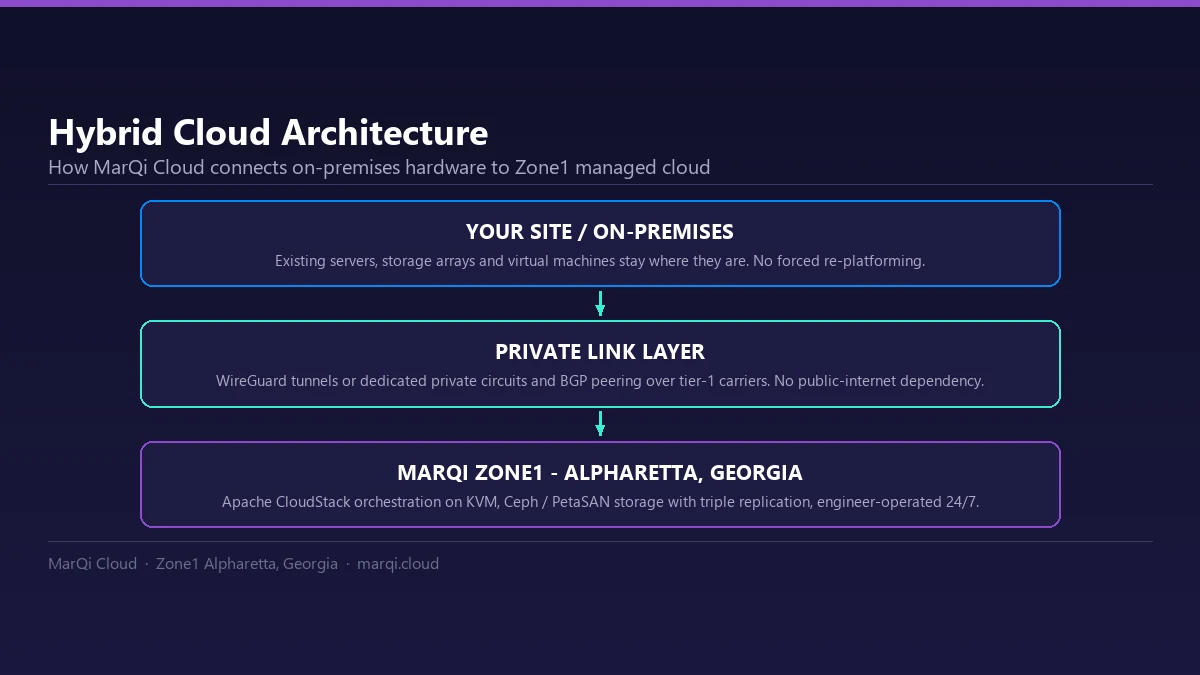
In an increasingly digital world, where data is the new currency, the importance of data sovereignty and compliance cannot be overstated. As organizations migrate their operations to the cloud, understanding the implications of where that data is stored becomes critical. This article delves into why US-based cloud infrastructure is paramount for data sovereignty and compliance, particularly for enterprises that prioritize security, regulatory adherence, and operational efficiency. As an enterprise cloud provider, MarQi Cloud offers hybrid cloud solutions that align with these needs, keeping your data in its US-based Zone1 data center; your organization evidences its own compliance.
Understanding Data Sovereignty
Data sovereignty refers to the concept that data is subject to the laws and regulations of the country in which it is stored. As organizations increasingly rely on cloud computing, understanding data sovereignty becomes crucial. Data stored in foreign jurisdictions may be subject to laws that do not align with the organization’s compliance requirements or ethical standards. For example, the EU’s General Data Protection Regulation (GDPR) imposes strict data protection requirements on organizations that handle the personal data of EU citizens, regardless of where the organization is based.
Organizations must ensure that their data management practices comply with local laws while also aligning with international regulations. This is where US-based cloud infrastructure plays a pivotal role. By storing data within the United States, organizations can better ensure compliance with US laws and regulations while minimizing the risks associated with international data transfers.
The Importance of Compliance in Cloud Computing
Compliance in cloud computing is not just a regulatory requirement; it is a critical component of maintaining customer trust and safeguarding sensitive information. Non-compliance can lead to severe penalties, including hefty fines and reputational damage. Organizations must navigate a complex landscape of regulations, including:
- Health Insurance Portability and Accountability Act (HIPAA): For healthcare organizations, ensuring compliance with HIPAA is essential to protect patient data.
- Federal Information Security Management Act (FISMA): This applies to federal agencies and contractors, establishing a framework for securing government information.
- Payment Card Industry Data Security Standard (PCI DSS): Organizations handling credit card transactions must adhere to PCI DSS to protect cardholder data.
Non-compliance can result in data breaches, legal challenges, and loss of business. Therefore, understanding the compliance landscape is essential for organizations considering cloud migration.
Why Choose US-Based Cloud Infrastructure?
There are several compelling reasons to opt for US-based cloud infrastructure, particularly for enterprises concerned with data sovereignty and compliance:
- Regulatory Alignment: US-based cloud providers are familiar with local laws and regulations. This familiarity ensures that organizations can meet compliance requirements more effectively.
- Enhanced Security: Storing data within the US allows organizations to leverage advanced security measures that comply with local regulations. This is particularly important for industries such as healthcare and finance, where data breaches can have severe consequences.
- Reduced Risk of Data Breaches: By choosing a US-based provider like MarQi Cloud, organizations can mitigate the risks associated with international data transfers and foreign jurisdiction laws, which may not offer the same level of protection.
In contrast, storing data with non-US providers may expose organizations to various risks, including compliance challenges and potential legal issues.
Key Compliance Regulations in the US
Understanding the key compliance regulations that affect cloud computing in the US is essential for organizations considering cloud migration. Some of the most important regulations include:
| Regulation | Description | Applicability |
|---|---|---|
| HIPAA | Protects patient health information. | Healthcare organizations and their partners. |
| FISMA | Establishes a framework for securing federal information. | Federal agencies and contractors. |
| PCI DSS | Protects cardholder data. | Any organization that processes credit card transactions. |
| GDPR | Regulates data protection and privacy for individuals in the EU. | Organizations handling data of EU citizens. |
Organizations must assess their specific compliance requirements based on their industry and operations. Working with a US-based cloud provider can facilitate adherence to these regulations, as they are designed to help organizations navigate the complex compliance landscape.
Challenges of Non-US Cloud Providers
While international cloud providers may offer attractive pricing and features, they pose unique challenges related to data sovereignty and compliance:
- Regulatory Conflicts: Data stored in foreign jurisdictions may be subject to different regulations that conflict with US laws, leading to compliance challenges.
- Data Access Risks: Foreign governments may have more access to data stored in their jurisdiction, increasing the risk of unauthorized access and potential data breaches.
- Complexity of Data Transfers: Moving data across borders can complicate compliance efforts and increase the risk of non-compliance.
These challenges highlight the importance of selecting a cloud provider that aligns with your compliance needs and data sovereignty requirements.
How MarQi Cloud Ensures Compliance and Security
MarQi Cloud is committed to providing enterprise-grade cloud infrastructure that prioritizes data sovereignty and compliance. Here are some of the ways we achieve this:
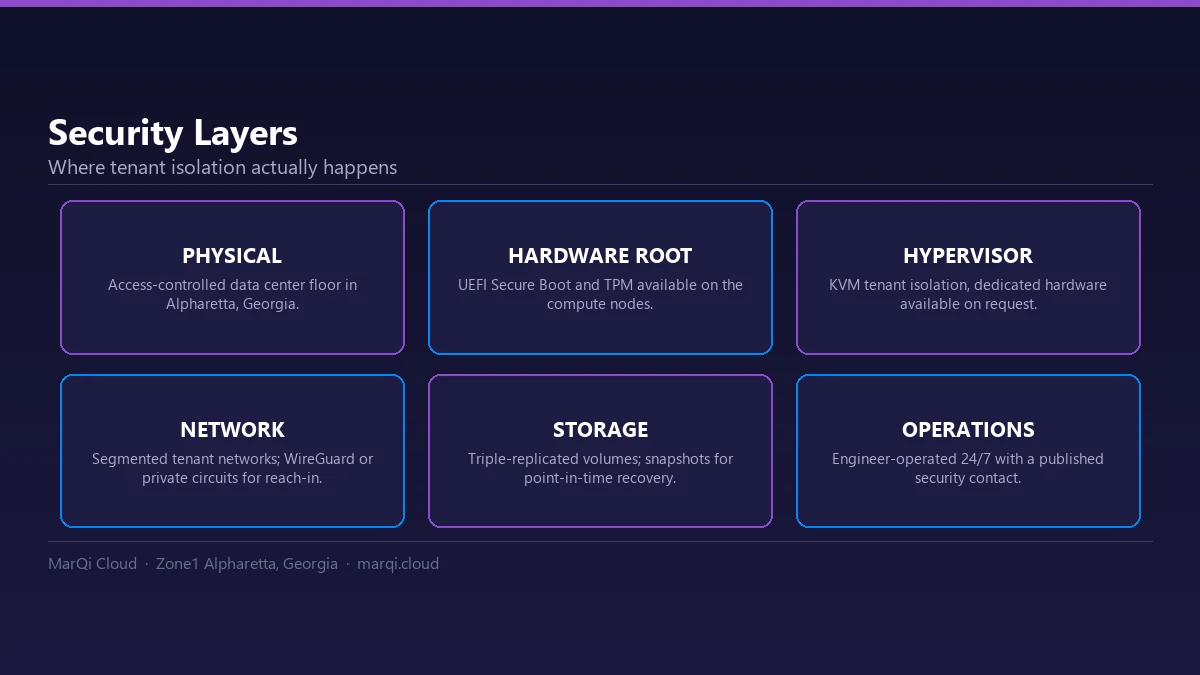
- US-Based Infrastructure: Our Zone1 data center is in Alpharetta, Georgia, in the United States, which supports data-residency requirements under US laws; your organization evidences its own compliance.
- Expertise in Compliance: Our team of cloud engineers and infrastructure architects are well-versed in industry compliance standards, ensuring that your data is handled in accordance with regulations like HIPAA and PCI DSS.
- Robust Security Measures: We employ advanced security measures, including encryption, firewalls, and access controls, to protect your data from unauthorized access.
By choosing MarQi Cloud, organizations can rest assured that their data is secure, compliant, and aligned with their business objectives.
Expert Tips for Ensuring Data Sovereignty
Here are some actionable steps organizations can take to ensure data sovereignty:
- Evaluate Compliance Needs: Assess your organization’s specific compliance requirements based on your industry and operations.
- Choose a Trusted Provider: Select a US-based cloud provider with a proven track record of compliance and security.
- Implement Security Best Practices: Regularly review and update your security measures to protect against evolving threats.
- Monitor Compliance Continuously: Establish a system for ongoing compliance monitoring to ensure adherence to regulations.
Conclusion
In conclusion, the significance of US-based cloud infrastructure for data sovereignty and compliance cannot be overstated. As organizations navigate the complexities of cloud computing, understanding the implications of data storage location is crucial. By leveraging the expertise and robust solutions offered by MarQi Cloud, organizations can ensure their data remains secure, compliant, and aligned with their operational goals. To learn more about how MarQi Cloud can support your organization’s cloud journey, contact us today.
FAQs
What is data sovereignty?
What is data sovereignty?
Data sovereignty refers to the concept that data is subject to the laws and regulations of the country in which it is stored.
Why is compliance important in cloud computing?
Why is compliance important in cloud computing?
Compliance is crucial in cloud computing to protect sensitive information, maintain customer trust, and avoid legal penalties.
What are the benefits of US-based cloud infrastructure?
What are the benefits of US-based cloud infrastructure?
Benefits include regulatory alignment, enhanced security, and reduced risk of data breaches.
What key regulations should organizations be aware of?
What key regulations should organizations be aware of?
Key regulations include HIPAA, FISMA, PCI DSS, and GDPR.
What challenges do non-US cloud providers pose?
What challenges do non-US cloud providers pose?
Challenges include regulatory conflicts, data access risks, and complexities of data transfers.
How does MarQi Cloud ensure compliance?
How does MarQi Cloud ensure compliance?
MarQi Cloud supports compliance through US-based infrastructure, expertise in compliance standards, and robust security measures.
What steps can organizations take to ensure data sovereignty?
What steps can organizations take to ensure data sovereignty?
Organizations should evaluate compliance needs, choose a trusted provider, implement security best practices, and monitor compliance continuously.
How can I contact MarQi Cloud for more information?
How can I contact MarQi Cloud for more information?
You can contact MarQi Cloud through their website for more information.