How Cloud Native App Development Improves Reliability and Performance
February 13, 2026
Hybrid Cloud vs Public Cloud in 2026: When Cost Predictability Wins
February 18, 2026

What to Look for in a Reliable Open Source Hybrid Cloud Provider
What Is an Open Source Hybrid Cloud?
An open source hybrid cloud combines private systems with public cloud resources using open source technology. Businesses are moving toward this model because it gives them more flexibility, stronger control over their data, and better cost transparency.
This blog explains what matters most when choosing a reliable open source hybrid cloud provider and how to make the right decision for your business.
Why are Open Source Hybrid Cloud Providers essential for businesses?
Open source hybrid cloud providers supply platforms, software, and tools developed with open source technology. They help businesses manage private, public, and on-premises cloud systems together. These providers make it easy to move workloads between environments, avoid vendor lock-in, and maintain consistent management using technologies like Kubernetes, OpenStack, and Linux.
Key features of Open Source Hybrid Cloud Providers:
- Core technologies: OpenStack for private cloud management, Kubernetes for containers, and Linux as the foundation.
- Interoperability: Works smoothly across different vendors and hybrid cloud setups.
- Flexible Management: Companies can decide their setup, reduce costs, and protect their information.
Popular Open Source platforms and tools:
- Red Hat OpenShift: Runs applications across on-premises and public clouds.
- Apache Cloud Stack: Deploys and manages virtual machines at scale.
- OpenStack: Manages compute, storage, and networking resources across clouds.
Why do businesses choose Open Source Hybrid Cloud Providers?
- Avoid vendor lock-in and stay independent.
- Gain full control over cloud infrastructure and data.
- Scale resources easily as business needs grow.
Understanding Open Source software:
- Software that anyone can use, modify, and integrate freely.
- Full access to the code encourages innovation and collaboration.
- Powers open source cloud platforms with community-driven improvements.
Key benefits of Hybrid Cloud:
- Scalability: Easily increase or add resources when needed.
- Rapid response: Public cloud handles spikes in demand quickly.
- Reliability: Decide where sensitive data is stored and maintain backups.
- Management: Orchestration and automation simplify operations.
- Security: Keep critical data private while using public clouds for other workloads.
- Cost efficiency: Compare costs and deploy resources where they are most affordable.
How does open source relate to cloud computing?
- Supports private, public, and hybrid cloud models.
- Covers services like SaaS, IaaS, and PaaS.
- Improves integration and interoperability between different systems.
Open Source Platforms for Managing Multiple Clouds:
A multi-cloud management platform open source, allows businesses to control multiple cloud services like AWS, Azure, and Google Cloud from one place. It makes monitoring easier, automates tasks, improves security, and avoids dependency on a single provider.
Leading Multi Cloud Open Source Management tools:
- Cloud forte: Track and manage multi-cloud resources and costs.
- Mist.io: Easy provisioning, monitoring, and cost management.
- Terraform / Open Tofu: Write infrastructure as code for multiple providers.
- OpenStack: Build and manage private and hybrid clouds.
- Kubernetes with Multi Cloud Operators: Orchestrate containers across clouds.
- SUSE Rancher: Centralized management for Kubernetes clusters across clouds.
Main Capabilities:
- Single Control Panel: Manage all cloud resources in one interface.
- Budget and Usage Tracking: Keep an eye on costs and optimize cloud usage.
- Automated Operations: Deploy, scale, and manage resources without manual work.
- Security and Rules Management: Apply policies, control access, and confirm compliance.
Advantages of Multi-Cloud Platform:
- Freedom to use the best services from any provider.
- Reduce costs by efficiently using cloud resources.
- Easily move applications between different clouds.
- Minimize downtime and reliable performance.
Why do companies choose this approach?
Most modern organizations rely on multiple clouds for flexibility, cost efficiency, and performance. A multi-cloud management platform open source gives a single interface to oversee all cloud resources, maintain security, and manage workloads without expensive licensing.
Typical Uses:
- Disaster recovery and backup across multiple clouds.
- Improve global performance by using nearby servers.
- Follow regional compliance rules.
- Provide approved cloud tools to avoid shadow IT.
Importance of Open Source Cloud Services:
Open source cloud services are cloud solutions built on publicly available software that anyone can use, modify, and share. They allow businesses to set up private, public, or hybrid cloud environments with more control, lower costs, and no vendor lock-in. With open code and strong community support, open source cloud services offer flexibility, transparency, and scalability for modern business needs.
Key features of Open Source Cloud Services:
- Adaptability & Control: Customize cloud systems to meet your business needs.
- Cost-Effective: No licensing fees, only costs are maintenance and skilled staff.
- Community Support: Developed by global communities for faster updates and transparency.
Cloud Service Models:
- IaaS: Virtual servers, storage, and networks.
- PaaS: Development and deployment environments.
- SaaS: Ready-to-use cloud applications.
- FaaS (Serverless): Run code without managing servers.
What these services do?
- Manage computing power, storage, and networking in one system.
- Give full control to customize cloud setups as requirements change.
- Reduce costs by eliminating expensive licensing fees.
- Benefit from regular updates and improvements from global communities.
Popular Open Source Tools:
- Open Stack for cloud infrastructure management.
- Kubernetes for container management and scaling.
- Apache Cloud Stack for IaaS solutions.
- Open Shift for enterprise container platforms.
Cloud Service Options:
- Infrastructure services for virtual servers and storage.
- Platform services for application development and deployment.
- Software services for ready-to-use online applications.
- Serverless services let you execute code without managing any servers.
Why do businesses prefer them?
- Avoid reliance on a single cloud provider.
- Support growing workloads and data-intensive applications.
- Improve security, compliance, and system visibility.
- Integrate easily with existing tools and systems.
Why do businesses choose Open Source Cloud Service Providers for modern cloud solutions?
Open source cloud service providers offer cloud computing solutions built on open source software, giving businesses more freedom, control, and cost savings. They support IaaS, PaaS, and SaaS models and help organizations build private, public, or hybrid cloud environments without being locked into a single vendor. With transparent code and strong community support, Open source cloud service providers deliver flexible and scalable cloud solutions.
Core advantages of Open Source Providers:
- No vendor lock-in, making migration easier.
- Open and transparent code for better security.
- Community-driven development with regular updates.
- Lower total cost of ownership over time.
Popular Open Source Platforms:
- OpenStack for managing compute, storage, and networking.
- Apache Cloud Stack for IaaS environments.
- Open Shift for container-based PaaS.
- Open Nebula for data centre management.
- Kubernetes for container orchestration.
Key information about Cloud Service Providers:
- Provide cloud infrastructure, platforms, and applications.
- Support private, public, and hybrid cloud setups.
- Allow system customization based on business needs.
- Reduce costs by eliminating licensing fees.
Where are they used?
- Building private and hybrid clouds.
- Running virtual machines and containerized apps.
- Supporting data control and digital sovereignty.
- Replacing or complementing proprietary cloud services.
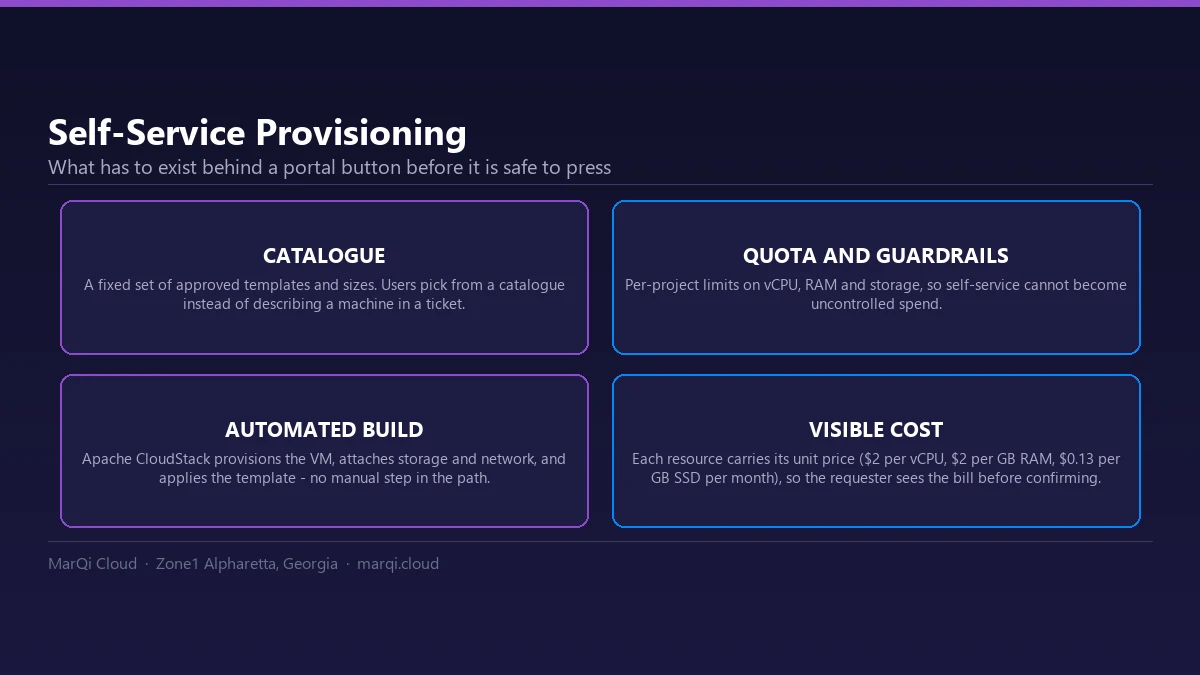
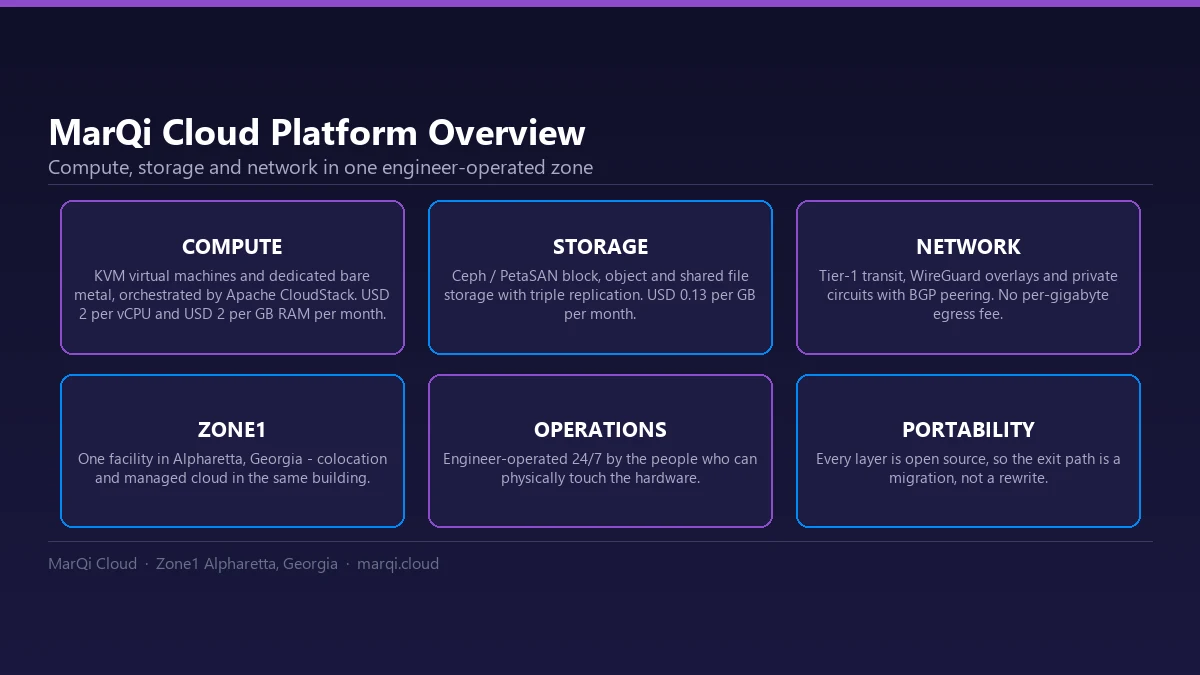
Why MarQi Cloud is perfect for an Open Source Hybrid Cloud Provider?
- Own Data Centers:
- Full control over security and performance.
- More reliable than shared environments.
- Strong Storage and Network:
- Dedicated storage for high availability.
- Redundant network to prevent downtime.
- Supports open source hybrid workloads.
- Credible Cloud Provider:
- Focused on open source cloud services:
- Flexible for hybrid and multi-cloud setups.
- Reliable for businesses of all sizes.
How MarQi Cloud Works?
- Provides a protected and high-performance cloud.
- Let businesses use private, public, or hybrid clouds.
- Offers scalable, flexible, and dependable infrastructure.
Conclusion:
A reliable open source hybrid cloud provider offers safe security, flexibility, and scalable solutions for businesses. Choosing a provider with full control, transparency, and long-term value is essential. MarQi Cloud is a strong and dependable choice for organizations seeking a protected and flexible open source hybrid cloud solution.