8 Features of Modern Cloud Native App Development Services
March 18, 2026
How to Scale GPU Clusters in Atlanta: A Comprehensive Guide for Businesses
March 18, 2026

Open Source Hybrid Cloud: The Future of Enterprise IT
Introduction:
Today, many businesses are moving to cloud computing to improve their IT systems and manage their growing digital needs. An open source hybrid cloud solutions provider helps companies use both private and public clouds together for better flexibility and performance. With hybrid cloud consulting services, hybrid cloud platform solutions, and hybrid cloud networking solutions, businesses can build a safe and reliable cloud setup.
Understanding an Open-Source Hybrid Cloud Provider:
Businesses today need IT systems that are flexible, safe, and cost-effective. An open-source hybrid cloud solutions provider helps companies manage private data centres and public cloud services using open-source tools like Kubernetes and OpenStack. This approach allows businesses to scale resources, keep control, and avoid depending on a single vendor.
Essential Parts of a Hybrid Cloud Solution Provider:
- Private Cloud: Used for sensitive or critical data, the private cloud gives businesses full control and strong security. It’s ideal for important applications that need to stay protected.
- Public Cloud: This provides scalable, cost-effective resources for non-sensitive workloads. Businesses can quickly increase computing power or storage without buying extra hardware, making it flexible and efficient.
- Hybrid Cloud Management Platform: This platform connects the private and public clouds, allowing easy monitoring, management, and workload movement. It provides smooth operations, better resource use, and consistent performance across all environments.
How do Hybrid Cloud systems operate?
- Integrates private, public, and on-premises systems smoothly to work as one.
- Moves workloads between environments based on demand and business needs.
- Offers flexibility, allowing resources to scale quickly for seasonal spikes or new projects.
- Helps maintain consistent performance, reliability, and operational efficiency across all environments.
Advantages of partnering with an Open-Source Provider:
- Strategic Guidance: Helps plan, design, and build cloud infrastructure reliable to business goals.
- Seamless Integration: Connects existing systems with cloud services without disrupting operations.
- Performance Tracking: Continuously monitors resources to maintain reliability and efficiency.
- Ongoing Support: Provides long-term maintenance, security updates, and infrastructure improvements to confirms smooth operation.
Why do businesses prefer Open-Source Hybrid Cloud Solutions?
- Flexibility and Scalability: Easily shift workloads between private and public clouds as needs change.
- Cost Efficiency: Reduce expenses by using public clouds for general tasks while maintaining private infrastructure for sensitive data.
- Improved Security and Compliance: Safeguard critical information and meet industry regulations.
- Independence from Vendors: Avoid being locked into one provider and customize solutions to fit specific business requirements.
Popular Open-Source Hybrid Cloud Platforms:
- Kubernetes: Manages infrastructure and applications centrally for hybrid cloud setups.
- OpenShift: Red Hat’s platform built on Kubernetes, offering ready-to-use hybrid cloud features.
- Eucalyptus: Allows businesses to build private or hybrid clouds compatible with AWS.
- Anthos: Google’s hybrid cloud platform, offering flexibility to manage workloads across various infrastructures.
Businesses challenges:
- Integration Complexity: Managing multiple cloud systems and tools can be complicated.
- Security and Compliance: Protecting data across different environments requires careful planning.
- Need for Expertise: Organizations may require skilled IT professionals or consulting services to reliable successful hybrid cloud management.
Working with an open-source hybrid cloud solutions provider helps businesses combine the best of private and public clouds. It provides flexibility, security, and cost efficiency while making it easier to scale as the company grows.
How Hybrid Cloud Consulting Services Support Businesses?
Hybrid cloud consulting services help organizations plan, implement, and manage a mix of private clouds, public clouds, and on-site infrastructure. These services make it easier to move workloads efficiently, improve security, reduce costs, and scale resources as needed, while keeping everything running smoothly across different environments.
Why companies rely on Hybrid Cloud Consulting Services?
- Expert Guidance: Consultants review your IT setup and recommend the best hybrid cloud approach.
- Smart Planning: Decide which workloads should stay on private clouds and which can run on public clouds.
- Seamless Migration: Move applications and data safely with minimal disruption.
- Improve Security: Protect sensitive information across all cloud environments.
- Cost Optimization: Make efficient use of resources to reduce unnecessary spending.
Core Parts of a Hybrid Cloud:
- Private Cloud: Safe space for critical or sensitive data.
- Public Cloud: Flexible, cost-effective resources for general workloads.
- Management Tools: Platforms to monitor, manage, and coordinate all resources easily.
How consultants add value?
- Assessment: Evaluate current IT systems and workloads.
- Strategy Development: Create a clear, reliable hybrid cloud plan.
- Migration Support: Provide safe and efficient transition to hybrid cloud.
- Performance Optimization: Monitor systems, automate tasks, and adjust resources when needed.
- Security and Compliance: Make sure data is safe and regulatory requirements are met.
Benefits of Hybrid Cloud Consulting Services:
- Faster Cloud Adoption: Helps businesses implement cloud technologies quickly without delays.
- Easy Resource Scaling: Allows companies to adjust resources as needed to handle changing demands.
- Improved Security: Protects data across both private and public clouds effectively.
- Cost-Effective Resource Management: Make sure efficient use of infrastructure to save money.
- Ongoing Support: Provides continuous help, updates, and maintenance for smooth operations.
Issues they tackle:
- Integrating legacy systems with modern cloud platforms.
- Managing multiple cloud environments consistently.
- Filling gaps in internal IT expertise.
- Maintaining security, compliance, and cost efficiency.
Planning a Hybrid Cloud Strategy:
- Assess Needs: Identify which workloads are suitable for private or public cloud.
- Set Goals: Define objectives for security, cost, and performance.
- Create a Migration Plan: Outline steps, resources, and timelines.
- Implement and Monitor: Move workloads safely, automate processes, and track performance.
Importance of Hybrid Cloud Platform Solutions:
Hybrid cloud platform solutions connect private infrastructure and public clouds like AWS, Azure, or Google Cloud, allowing seamless data and application movement. They improve performance, flexibility, security, and cost efficiency while keeping sensitive information under control.
Key Features of Hybrid Cloud Platform Solutions:
- Centralized Management: A unified platform allows businesses to monitor, manage, and control all resources, whether on-premises, private, or public cloud, from one interface. This simplifies operations and reduces complexity.
- Virtualization and Containerization: Technologies like Docker and Kubernetes make sure applications run consistently across different environments, making deployment, scaling, and updates more efficient.
- Safe Networking and Integration: Reliable, high-speed, and safe connections link on-premises systems to public cloud providers, enabling smooth data flow and workload portability.
Major Benefits:
- Flexibility and Scalability: Businesses can scale resources up or down as demand changes. For example, they can use public cloud capacity during peak times while keeping sensitive data safe on private systems.
- Improve Security and Compliance: Critical information stays protected in private environments, while less-sensitive workloads can benefit from the efficiency of public cloud services.
- Optimized Performance: Workloads can be placed strategically based on security needs, compliance requirements, or cost considerations, providing high efficiency.
- Cost Efficiency: Organizations can reduce expenses by using public cloud resources for non-critical tasks, freeing up budgets for strategic investments.
- Consistency and Reliability: Hybrid cloud solutions provide uniform operations across all platforms, minimizing downtime and operational inefficiencies.
- Support for Innovation: Modern hybrid infrastructures enable organizations to leverage advanced technologies like artificial intelligence, machine learning, and automation, enhancing business capabilities.
Types of Hybrid Cloud Management Approaches:
- Customer Managed: The organization fully controls and manages its hybrid cloud infrastructure.
- Vendor Managed: The cloud provider manages the environment, providing smooth operation and maintenance.
- Partner Managed: Third-party partners oversee the hybrid cloud setup, handling technical and operational tasks.
- Cloud Provider Managed: Public cloud providers extend their services into private environments, offering solutions like AWS Outposts or Azure Stack.
Why Hybrid Cloud Platform Solutions matter?
Hybrid cloud platform solutions help businesses balance flexibility, security, and cost. They allow organizations to keep sensitive data safe while using public cloud resources for growth and scalability. These solutions make it easier to deploy applications, manage resources efficiently, protect data, and run operations smoothly. They also enable companies to adapt quickly to changes, adopt new technologies, and stay competitive.
Why is Hybrid Cloud Networking beneficial?
Hybrid cloud networking solutions connect on-premises data centres, private clouds, and public clouds like AWS, Azure, or Google Cloud into one unified system. This setup allows organizations to move data and applications easily between different platforms, improving performance, security, and reducing costs.
Main Components of Hybrid Cloud Networks:
- Safe Connections: VPNs and dedicated links like Direct Connect or ExpressRoute keep data safe and reliable communication.
- Software Defined Networking (SDN): Lets administrators manage networks virtually, making it easier to control resources across all environments.
- SD WAN: Optimizes traffic between offices, data centres, and cloud platforms for faster and smoother operations.
- Centralized Management: Dashboards and automation tools simplify monitoring, configuration, and deployment.
- Security Measures: Firewalls, encryption, and access controls protect sensitive data and manage traffic efficiently.
Why do businesses use it?
- Quickly scale resources as needed.
- Keep sensitive data safe while using public cloud for noncritical tasks.
- Reduce costs and optimize IT resources.
- Support modern workloads like AI, big data, and analytics.
- Reliable business continuity with reliable disaster recovery.
Key gains of Hybrid Cloud Networking Solutions:
- Flexibility and Scalability: Quickly add resources from the public cloud during high demand while keeping sensitive data safe.
- Better Performance: Reduce delays by placing workloads closer to users.
- Cost Savings: Use existing infrastructure efficiently and expand with public cloud when needed.
- Disaster Recovery: Easily back up data and continue operations during outages.
How does it work?
- VPNs: Protected, encrypted connections over the internet.
- WANs: Reliable long distance connections.
- APIs: Enable data and applications to communicate between different cloud environments.
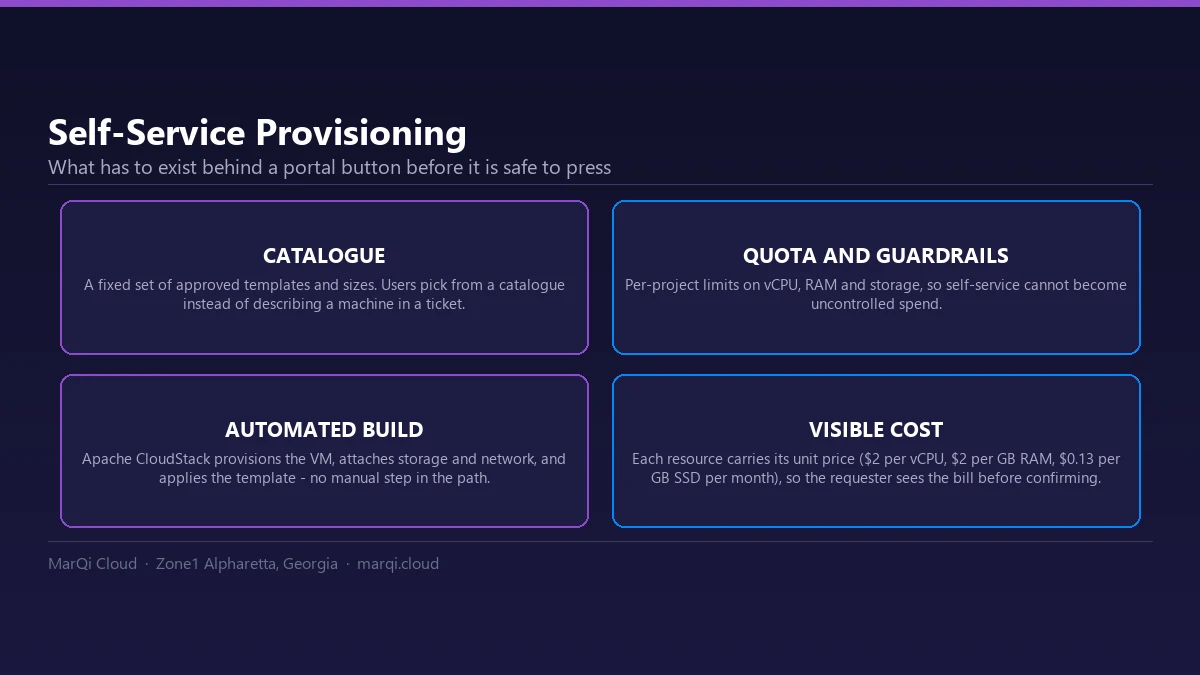
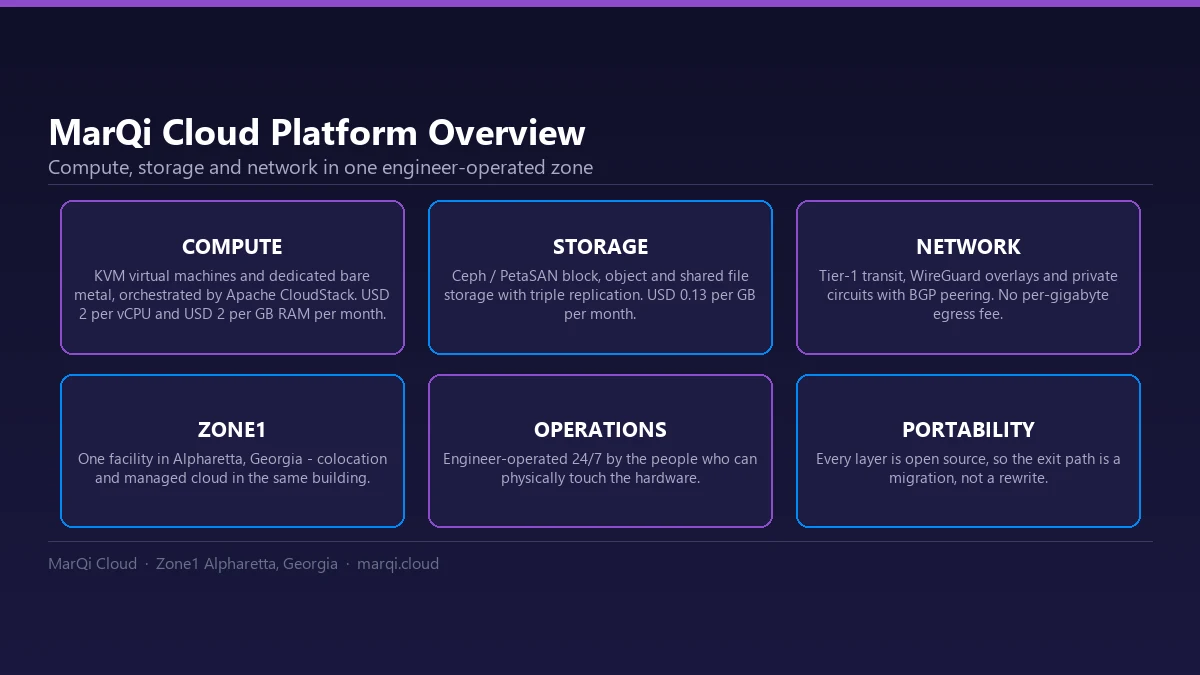
Highlighting MarQi Cloud’s Open Source Hybrid Cloud Platform:
- Uses open source cloud technologies.
- Built for reliability, security, and easy scalability.
Key Features:
- Independent data centre for enterprise workloads.
- Dedicated storage cluster for fast and safe data access.
- Redundant network fabric to keep connections running.
- Enterprise grade hybrid cloud platform solutions.
Business Rewards:
- Reliable infrastructure for smooth operations.
- Scalable solutions to grow with your business.
- Expert hybrid cloud consulting services for better management
Conclusion:
Open source hybrid cloud solutions offer businesses flexibility, security, and efficient IT management. With the right provider, companies can modernize their infrastructure, scale easily, and respond quickly to changing needs. These solutions, including hybrid cloud consulting, platform, and networking services, help organizations stay competitive and future ready.