Why Private Cloud Hosting Is Essential for Regulated Industries
July 9, 2026
How MarQi Cloud’s Open Source Stack Eliminates Vendor Lock-In for Enterprise Clients
July 9, 2026
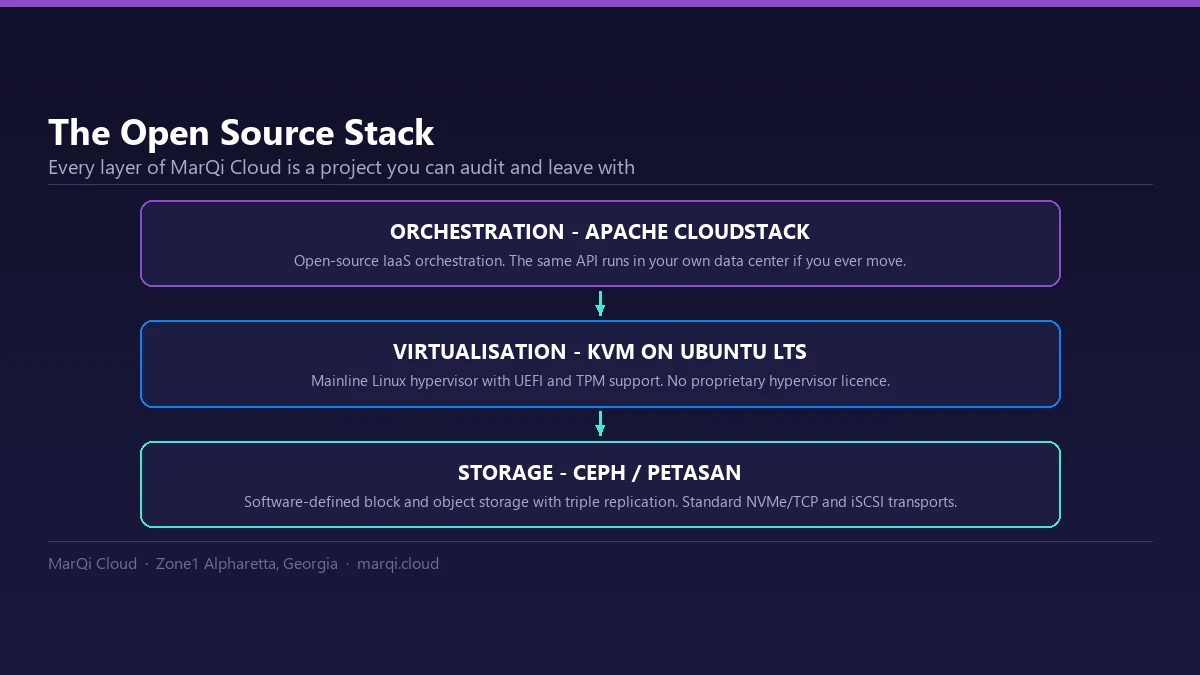
The Complete Guide to Cloud Infrastructure Sizing for Mid-Size Organizations
As mid-size organizations increasingly turn to cloud solutions, understanding how to effectively size cloud infrastructure becomes critical. This complete guide will delve into the essential factors that influence cloud infrastructure sizing, helping you make informed decisions that align with your business needs. By the end of this article, you will have a solid grasp of how to assess your organization’s requirements, select the right resources, and ensure a scalable, efficient cloud environment.
What is Cloud Infrastructure Sizing?
Cloud infrastructure sizing refers to the process of determining the appropriate amount and type of cloud resources needed to meet specific business requirements. This includes computing power, storage capacity, and network resources. For mid-size organizations, getting this right is crucial to optimizing costs, performance, and scalability.
Why Cloud Infrastructure Sizing Matters
Correctly sizing your cloud infrastructure can lead to significant benefits:
- Cost Efficiency: Oversizing can lead to wasted resources and unnecessary expenses, while undersizing can result in performance issues and lost revenue.
- Performance Optimization: Properly sized infrastructure ensures that applications run smoothly, improving user experience.
- Scalability: A well-sized infrastructure allows for easy scaling as business needs evolve.
Factors Influencing Cloud Infrastructure Sizing
1. Workload Requirements
Understanding your workload is the first step in effective sizing. Workloads can vary significantly based on application types, user demand, and processing needs. For example, a data-intensive application will require more computational power and storage compared to a simple web server.
2. User Demand
The number of users accessing your applications directly impacts the resources needed. Consider peak usage times and how many users will be simultaneously accessing services.
3. Data Storage Needs
Evaluate your data storage requirements, including the type of data (structured vs. unstructured), regulatory compliance, and future growth. Mid-size organizations often require scalable storage solutions that can adapt to changing data needs.
4. Compliance and Security
Data compliance regulations, especially in industries like healthcare and finance, can dictate specific infrastructure requirements. Ensure that your cloud provider offers solutions that meet these standards.
5. Disaster Recovery and Business Continuity
Your cloud infrastructure must support disaster recovery and business continuity plans. This includes having sufficient backup resources and failover capabilities.
Steps to Size Your Cloud Infrastructure
- Assess Current and Future Needs: Analyze current workloads, user demand, and future growth projections.
- Determine Resource Requirements: Based on your assessment, calculate the required computing power, storage, and network capacity.
- Choose the Right Cloud Model: Decide between public, private, or hybrid cloud solutions based on your specific needs.
- Consider Performance Metrics: Establish performance metrics that will help you monitor and adjust your infrastructure over time.
- Engage with Experts: Consult with cloud infrastructure specialists, such as those at MarQi Cloud, to validate your sizing strategy.
Best Practices for Cloud Infrastructure Sizing
- Use Automation Tools: Leverage cloud management tools to automate resource scaling based on demand.
- Monitor and Optimize: Continuously monitor your infrastructure performance and optimize as needed.
- Implement a Multi-Cloud Strategy: Consider using multiple cloud providers to enhance flexibility and avoid vendor lock-in.
- Document Everything: Keep detailed documentation of your cloud resources and configurations for future reference.
Common Mistakes to Avoid in Cloud Sizing
- Neglecting Future Growth: Failing to account for future scalability can lead to performance bottlenecks.
- Ignoring Performance Metrics: Not tracking performance can result in under- or over-provisioning resources.
- Underestimating Security Needs: Overlooking compliance and security requirements can expose your organization to risks.
Using MarQi Cloud for Your Infrastructure Needs
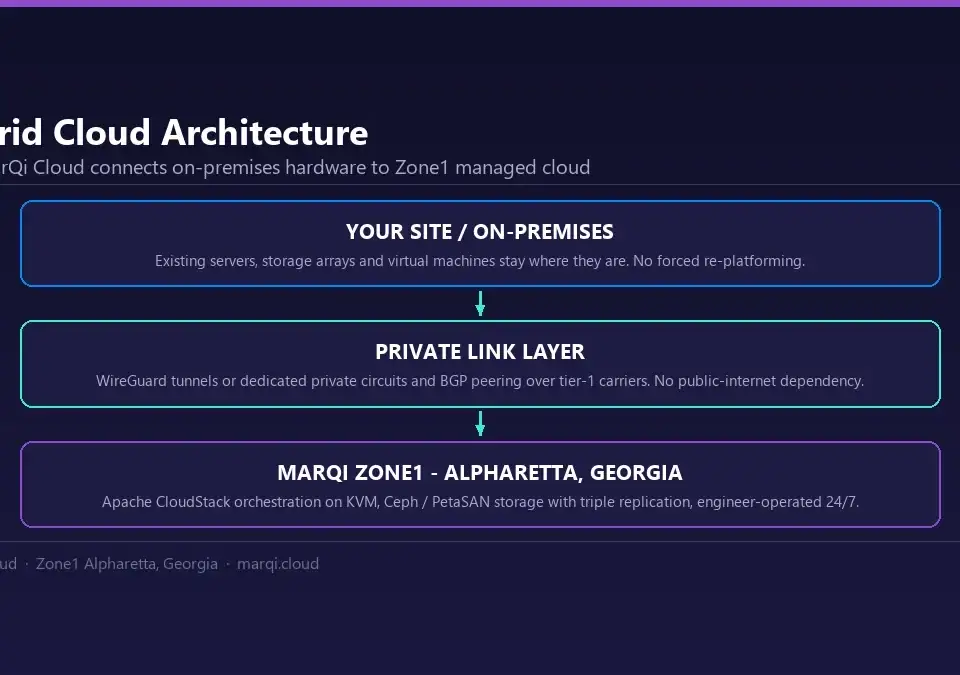
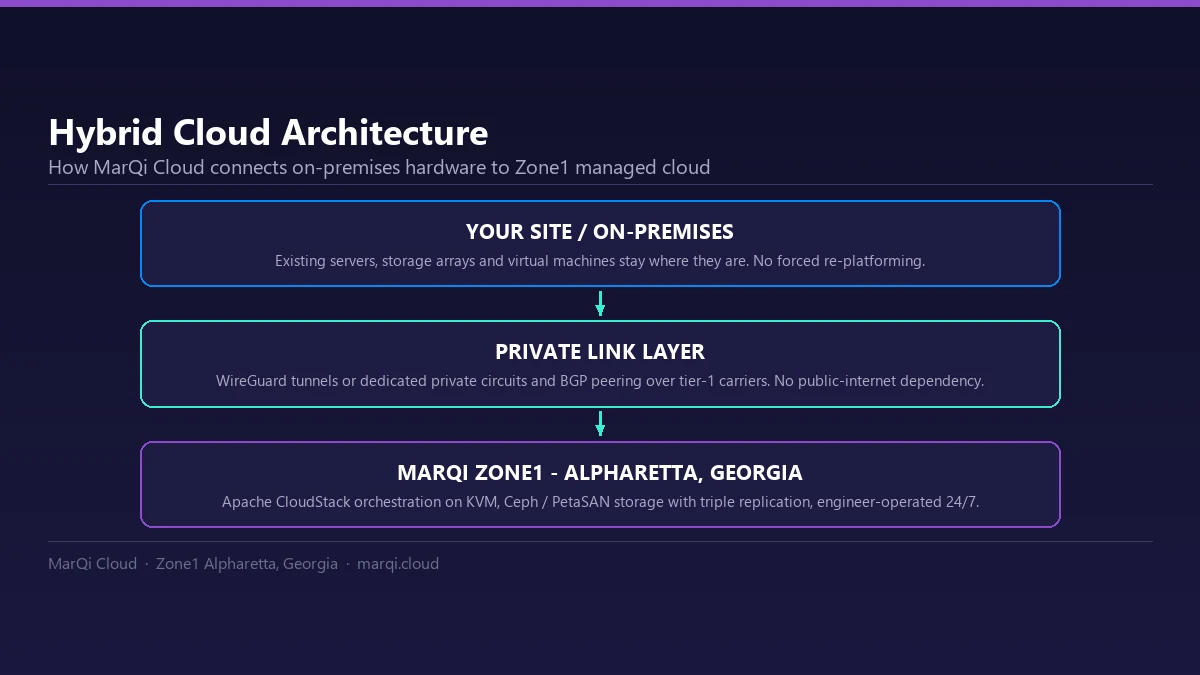
MarQi Cloud specializes in providing hybrid cloud solutions tailored for mid-size organizations. With flexible pricing models, zero lock-in, and expert support, MarQi Cloud can help optimize your cloud infrastructure sizing. Our performance-driven design ensures that your resources are always aligned with your business objectives.
Case Study: Successful Infrastructure Sizing with MarQi Cloud
Consider a mid-size healthcare organization that transitioned to MarQi Cloud. By accurately assessing their workload and data storage needs, they were able to reduce their infrastructure costs by 30% while improving performance and compliance with healthcare regulations.
Frequently Asked Questions
1. What is cloud infrastructure sizing?
Cloud infrastructure sizing is the process of determining the appropriate amount and type of cloud resources needed to meet specific business requirements.
2. Why is cloud infrastructure sizing important?
Proper sizing ensures cost efficiency, optimal performance, and scalability, which are crucial for mid-size organizations.
3. What factors should I consider for cloud sizing?
Key factors include workload requirements, user demand, data storage needs, compliance, and disaster recovery plans.
4. How do I assess my organization’s current and future needs?
Analyze current workloads, project future growth, and evaluate user access patterns.
5. What are some best practices for cloud infrastructure sizing?
Best practices include using automation tools, continuous monitoring, and maintaining detailed documentation.
6. What are common mistakes to avoid in cloud sizing?
Common mistakes include neglecting future growth, ignoring performance metrics, and underestimating security needs.
7. How can MarQi Cloud assist with sizing my infrastructure?
MarQi Cloud offers tailored hybrid cloud solutions, flexible pricing, and expert support to optimize your cloud infrastructure sizing.
8. What is the difference between public, private, and hybrid cloud?
Public cloud is shared resources over the internet, private cloud is dedicated resources for a single organization, and hybrid cloud combines both.