Why Enterprise Cloud Infrastructure Needs a Different Approach Than Public Cloud
July 8, 2026How MarQi Cloud’s US-Based Infrastructure Delivers Compliance and Performance Together
July 8, 2026
Private cloud vs public cloud: how do you actually choose?
Public cloud wins on elasticity and the breadth of managed services; private cloud wins on predictable cost, data locality and hardware control. Most enterprises end up hybrid — steady-state workloads on private capacity, bursts and edge services on public. The decision belongs to each workload, not to the company.
The Complete Guide to Choosing Between Public, Private, and Hybrid Cloud in 2026
As businesses increasingly rely on cloud computing to drive innovation and efficiency, the choice between public, private, and hybrid cloud models becomes critical for success. In 2026, organizations must navigate a complex landscape of options to find the best fit for their unique needs. This comprehensive guide will help you understand the differences between these cloud models, their benefits and drawbacks, and the key factors to consider when making your choice. By the end of this article, you will have the insights needed to make an informed decision for your organization.
What is a Public Cloud?
A public cloud is a cloud computing model where services and infrastructure are made available to the general public over the internet. These services are owned and operated by third-party cloud service providers, such as Amazon Web Services (AWS), Microsoft Azure, and Google Cloud Platform. Public clouds are designed to deliver on-demand resources and scalability, allowing businesses to access computing power and storage without the need for significant capital investment in hardware.
What is a Private Cloud?
A private cloud, in contrast, is a cloud infrastructure dedicated exclusively to a single organization. This model can be hosted on-premises within the organization’s data center or by a third-party provider. Private clouds provide greater control, security, and customization options compared to public clouds, making them an ideal choice for businesses with strict compliance requirements or those handling sensitive data.
What is a Hybrid Cloud?
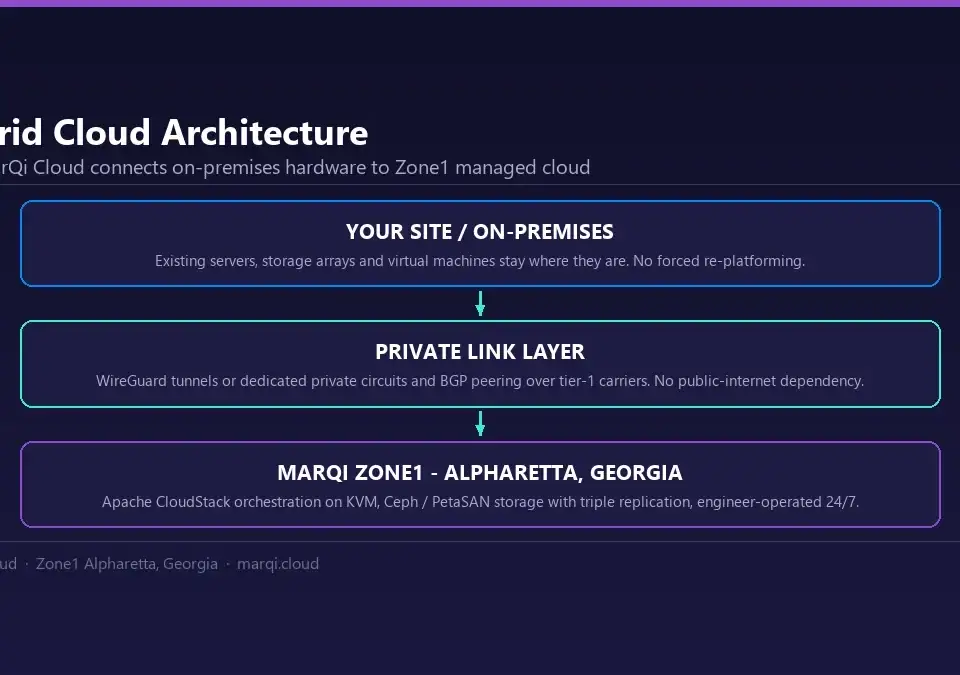
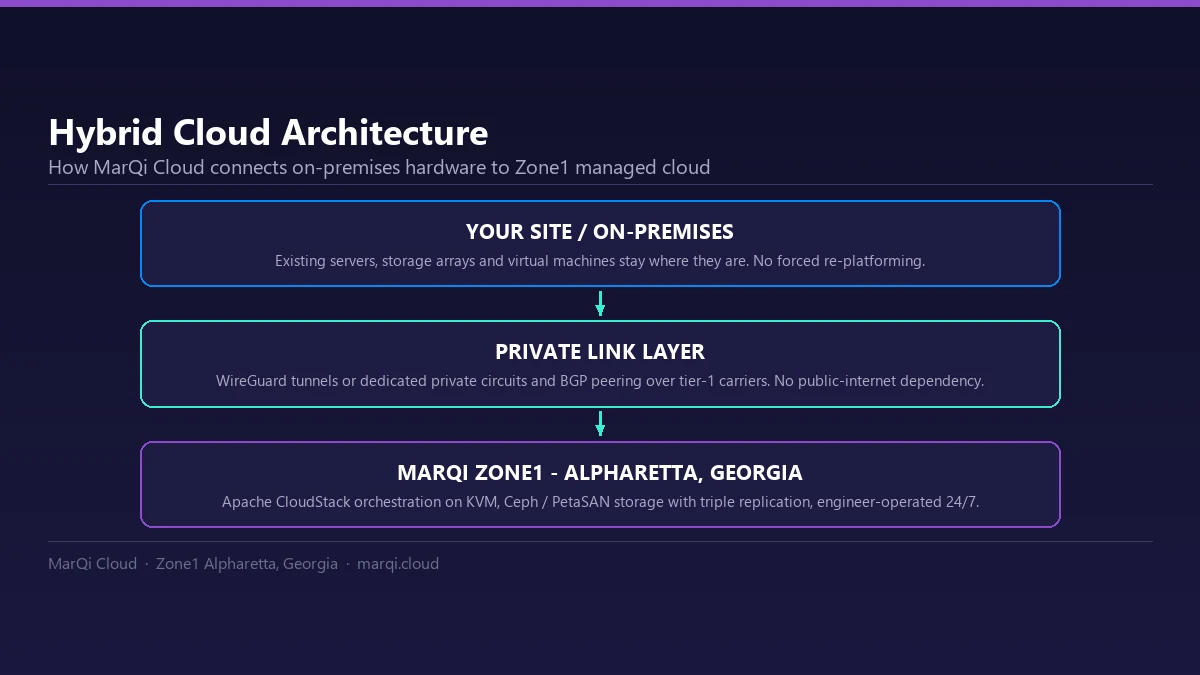
A hybrid cloud combines the best of both public and private cloud environments, allowing organizations to leverage the scalability of public clouds while maintaining control over sensitive data in private clouds. This model enables businesses to create a flexible infrastructure that can adapt to changing workloads and requirements, making it increasingly popular among enterprises in 2026.
Benefits of Public Cloud
1. Cost-Effective: Public clouds eliminate the need for significant upfront investments in hardware, as businesses pay only for the resources they consume.
2. Scalability: Organizations can quickly scale resources up or down based on demand, making public clouds ideal for fluctuating workloads.
3. Accessibility: Public cloud services are accessible from anywhere with an internet connection, allowing for remote work and collaboration.
4. Automatic Updates: Cloud providers handle maintenance and updates, ensuring that businesses always have access to the latest features and security patches.
Benefits of Private Cloud
1. Enhanced Security: Private clouds offer a higher level of security, making them suitable for organizations with sensitive data or compliance requirements.
2. Customization: Businesses can tailor their private cloud environments to meet specific needs, including hardware configurations and software applications.
3. Control: Organizations retain full control over their data and infrastructure, allowing for greater governance and compliance.
Benefits of Hybrid Cloud
1. Flexibility: Hybrid clouds allow businesses to choose where to host workloads based on their specific requirements, enabling optimal resource allocation.
2. Cost Management: Organizations can take advantage of the cost savings of public clouds for non-sensitive workloads while maintaining a private cloud for critical applications.
3. Disaster Recovery: Hybrid clouds can enhance disaster recovery strategies by enabling data replication and backup across multiple environments.
Key Factors to Consider When Choosing a Cloud Model
1. Data Security and Compliance: Assess your organization’s security requirements and regulatory obligations to determine which cloud model aligns best with your needs.
2. Budget: Evaluate your budget constraints and the total cost of ownership for each cloud model, including operational costs.
3. Scalability Needs: Consider your organization’s growth trajectory and the need for scalable resources to accommodate future demands.
4. Integration Capabilities: Ensure that the chosen cloud model can seamlessly integrate with existing systems and applications.
5. Performance Requirements: Assess the performance needs of your applications and workloads to determine the most suitable cloud environment.
Public vs. Private vs. Hybrid Cloud Comparison
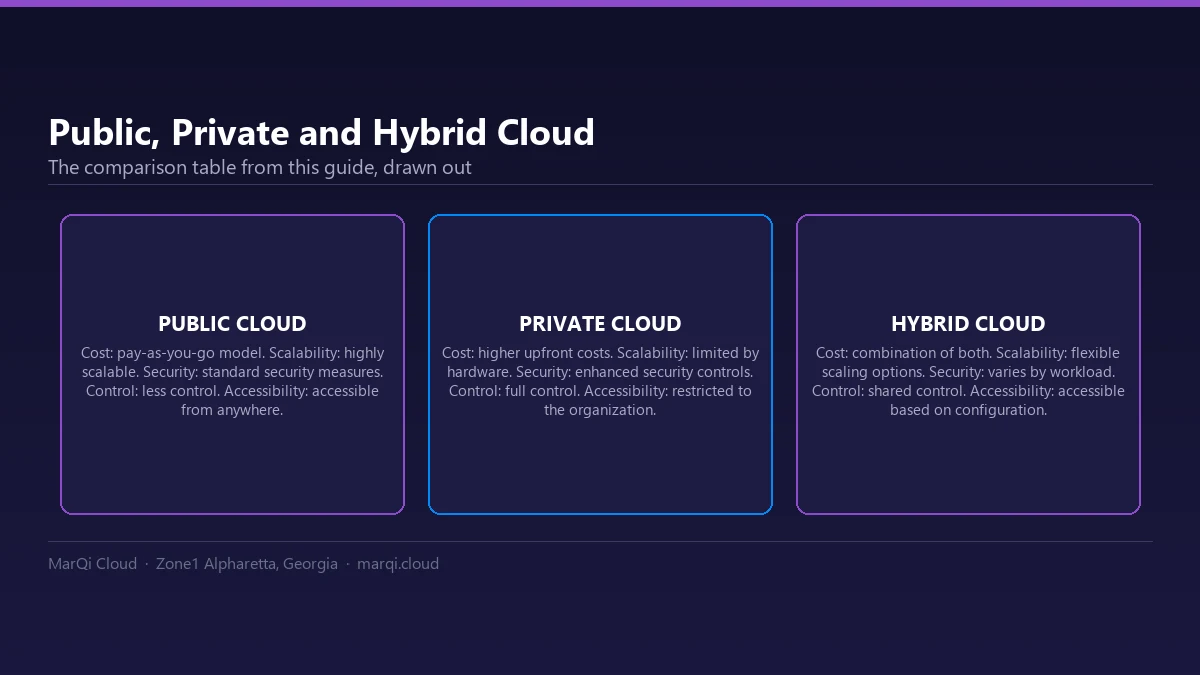
| Feature | Public Cloud | Private Cloud | Hybrid Cloud |
|---|---|---|---|
| Cost | Pay-as-you-go model | Higher upfront costs | Combination of both |
| Scalability | Highly scalable | Limited by hardware | Flexible scaling options |
| Security | Standard security measures | Enhanced security controls | Varies by workload |
| Control | Less control | Full control | Shared control |
| Accessibility | Accessible from anywhere | Restricted to organization | Accessible based on configuration |
Conclusion
Choosing between public, private, and hybrid cloud solutions in 2026 is a pivotal decision for organizations looking to optimize their IT infrastructure. Each model offers distinct advantages and disadvantages, and the right choice will depend on your specific business needs, compliance requirements, and budget. By carefully evaluating these factors and understanding the unique benefits of each cloud model, you can make an informed decision that aligns with your organization’s goals. For tailored cloud solutions that meet your enterprise needs, consider exploring MarQi Cloud’s offerings, including hybrid cloud infrastructure and private cloud hosting.
Frequently Asked Questions
1. What are the main differences between public, private, and hybrid clouds?
The main differences lie in ownership, accessibility, security, and cost. Public clouds are owned by third-party providers and accessible to anyone, private clouds are dedicated to a single organization, and hybrid clouds combine both models for flexibility.
2. Which cloud model is the most cost-effective?
Public clouds are generally the most cost-effective due to their pay-as-you-go pricing model, eliminating the need for large upfront investments.
3. Are hybrid clouds suitable for small businesses?
Yes, hybrid clouds can be suitable for small businesses, allowing them to leverage public cloud resources for non-sensitive workloads while maintaining control over critical applications.
4. How do I determine the right cloud model for my organization?
Assess your organization’s security, budget, scalability needs, integration capabilities, and performance requirements to determine the best cloud model.
5. Can I migrate from a public cloud to a private cloud?
Yes, migration from a public cloud to a private cloud is possible, but it requires careful planning and execution to ensure data integrity and compliance.
6. What are the security considerations for public clouds?
Public clouds typically implement standard security measures, but organizations must also take responsibility for securing their data and applications within the cloud environment.
7. How can I ensure compliance in a hybrid cloud environment?
Compliance in a hybrid cloud environment can be ensured by implementing robust governance policies, data encryption, and regular audits to meet regulatory requirements.
8. What is the future of cloud computing in 2026?
The future of cloud computing in 2026 will likely see increased adoption of hybrid cloud models, advancements in AI-driven cloud services, and a stronger emphasis on security and compliance.