The Ultimate Cloud Infrastructure Checklist Every Business Needs Before Going Live
July 7, 2026
The Complete Guide to Choosing Between Public, Private, and Hybrid Cloud in 2026
July 8, 2026
Why Enterprise Cloud Infrastructure Needs a Different Approach Than Public Cloud
Enterprise cloud usually means infrastructure dedicated to one organization with its own governance and support terms, while public cloud is multi-tenant infrastructure shared by many customers and bought on demand. Enterprise cloud infrastructure needs a different approach than public cloud solutions to meet the specific needs of larger organizations. In this article, we will explore the fundamental differences between enterprise cloud infrastructure and public cloud offerings, highlighting the unique requirements of enterprises and how tailored solutions can drive better performance, security, and compliance.
1. Understanding Cloud Models
Cloud computing has revolutionized how businesses operate, providing flexibility, scalability, and cost savings. However, not all cloud solutions are created equal. The two predominant models are enterprise cloud infrastructure and public cloud.
Public cloud services, such as Amazon Web Services (AWS) and Microsoft Azure, offer on-demand computing resources over the internet. They are generally less costly and easily accessible, making them attractive for small to medium-sized businesses. However, they may not fulfill the stringent requirements of larger enterprises that demand tailored solutions.
Enterprise cloud infrastructure, on the other hand, is designed specifically for larger organizations with complex needs. This model emphasizes customization, enhanced security, and compliance, which are critical for enterprise-level operations.
2. Key Differences Between Enterprise Cloud and Public Cloud
Understanding the key differences between enterprise cloud infrastructure and public cloud solutions is essential for organizations looking to optimize their cloud strategy. Here are some critical distinctions:
| Feature | Enterprise Cloud Infrastructure | Public Cloud |
|---|---|---|
| Customization | Highly customizable to meet specific business needs | Standardized solutions with limited customization |
| Security | Enhanced security protocols and compliance measures | Basic security features, risk of shared resources |
| Control | Full control over infrastructure and data | Limited control, dependent on the provider |
| Cost Structure | Flexible pricing models, often higher upfront costs | Pay-as-you-go pricing, potentially lower costs |
| Performance | Optimized for high workloads and performance | Variable performance based on demand |
This table highlights the stark contrasts between these two cloud models, illustrating why enterprises should consider a dedicated infrastructure approach.
3. Security and Compliance Considerations
One of the primary reasons enterprises require a different cloud approach is the need for enhanced security and compliance measures. Public clouds often operate on shared resources, which can expose sensitive data to potential breaches. In contrast, enterprise cloud infrastructure provides dedicated resources, allowing for stricter security protocols.
For example, healthcare organizations must comply with regulations such as HIPAA, which mandates stringent data protection standards. An enterprise cloud solution can ensure compliance by implementing necessary security measures, such as encryption, access controls, and regular audits.
Moreover, enterprise cloud providers often offer tailored security features, including:
- Advanced Threat Detection: Continuous monitoring and threat intelligence.
- End-to-End Encryption: Protecting data at rest and in transit.
- Dedicated Support: Access to security experts for incident response.
For further information on security measures, you can refer to the NIST Cybersecurity Framework.
4. Performance and Scalability
Performance and scalability are critical factors for enterprise operations. Public clouds may offer scalability, but performance can suffer during peak demand periods due to shared resources. In contrast, enterprise cloud infrastructure is designed to handle high workloads efficiently.
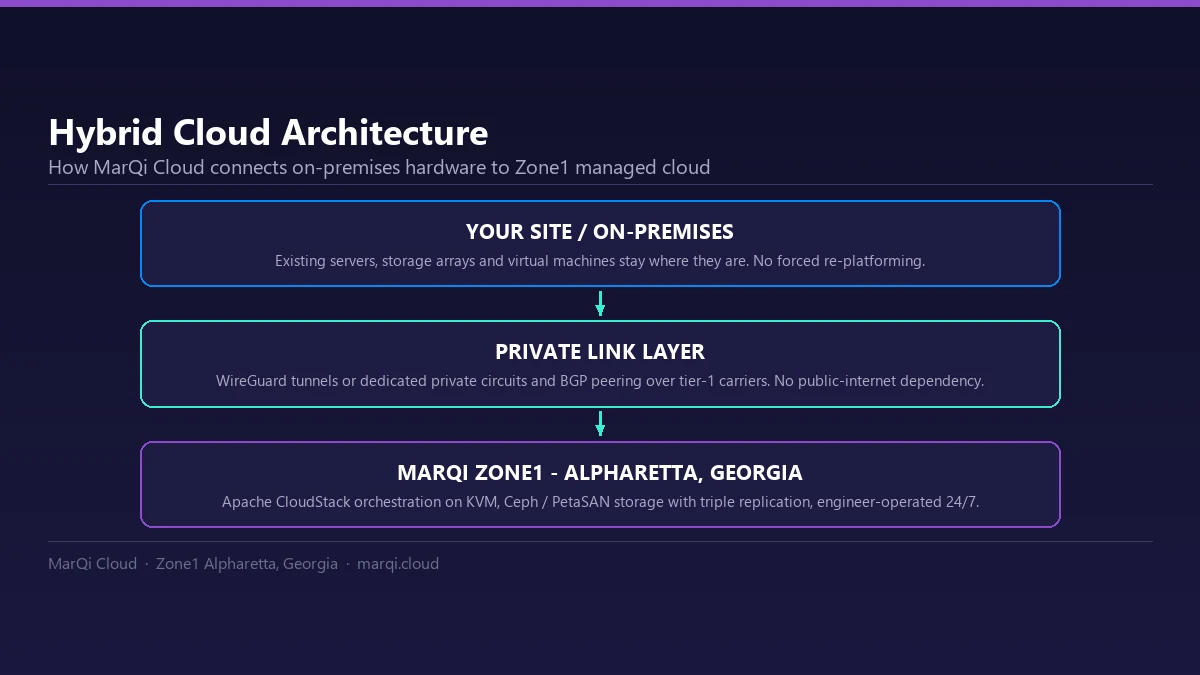
For instance, MarQi Cloud offers enterprise-grade cloud infrastructure that ensures optimal performance during peak times. With dedicated resources and advanced load balancing, businesses can achieve consistent performance levels, reducing downtime and improving user experience.
Additionally, enterprise cloud solutions often provide scalability tailored to specific business needs. For example, organizations can seamlessly scale their compute and storage resources as their operations grow, ensuring that their infrastructure evolves alongside their requirements.
5. Cost Management Strategies
Cost management is a critical concern for any organization. While public clouds offer attractive pay-as-you-go pricing, enterprises often face hidden costs associated with unexpected usage spikes. In contrast, enterprise cloud infrastructure allows for more predictable budgeting.
Organizations can implement various cost management strategies when using enterprise cloud solutions:
- Flexible Pricing Models: Choose from various pricing structures based on usage, ensuring that you only pay for what you need.
- Resource Optimization: Regularly review resource usage to eliminate waste and optimize costs.
- Long-Term Contracts: Negotiate contracts that provide discounts for longer commitments.
By employing these strategies, enterprises can achieve better cost control and avoid unexpected expenses.
6. Customization and Control
Customization is a significant advantage of enterprise cloud infrastructure. Larger organizations often have unique requirements that standard public cloud solutions cannot meet. This necessitates a tailored approach to infrastructure design.
Enterprise cloud solutions allow organizations to customize various components, including:
- Infrastructure Architecture: Design a cloud architecture that aligns with business needs.
- Security Protocols: Implement security measures specific to industry regulations.
- Resource Allocation: Allocate resources based on application requirements and performance considerations.
This level of customization not only enhances operational efficiency but also ensures that businesses can respond to changing needs swiftly.
7. The Role of Managed Services
Managed services play a crucial role in enterprise cloud infrastructure. With the complexity of managing a dedicated cloud environment, many organizations benefit from outsourcing their cloud management to experts.
Managed services can provide:
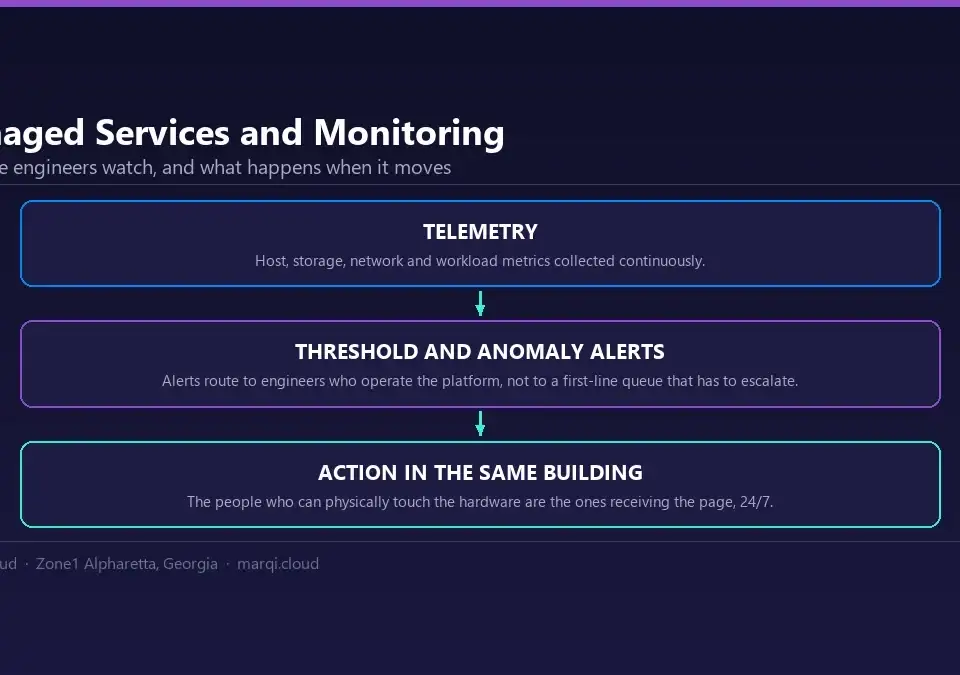
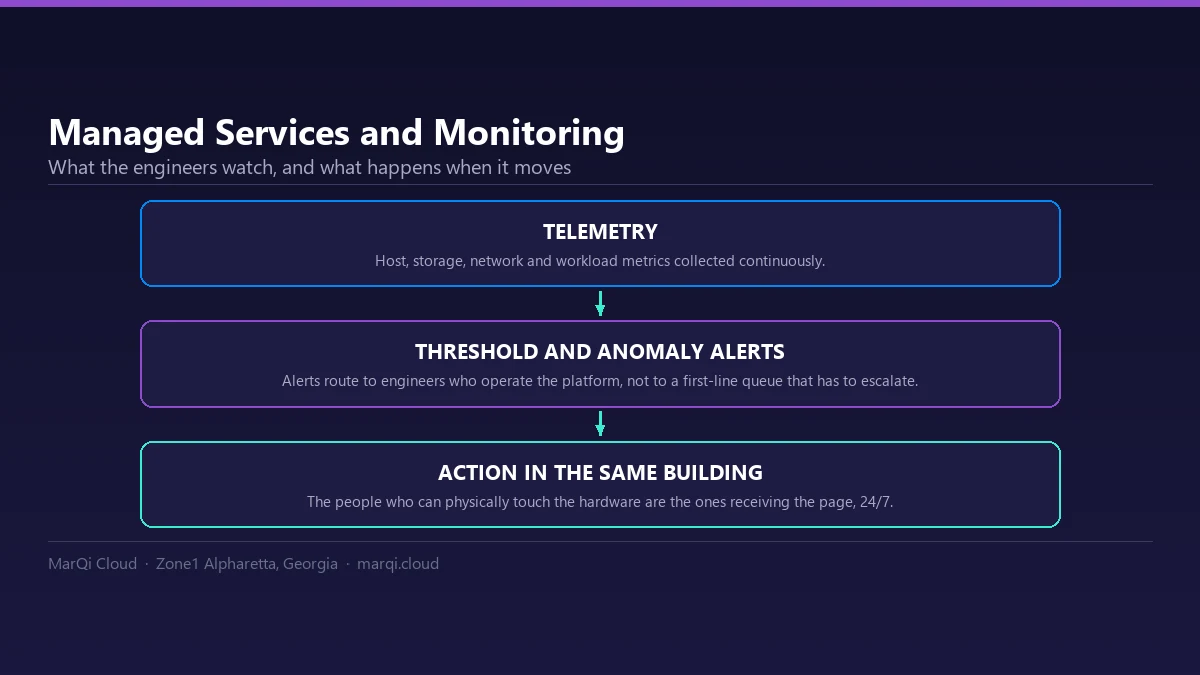
- 24/7 Monitoring: Continuous monitoring of infrastructure health and performance.
- Proactive Maintenance: Regular updates and optimizations to ensure peak performance.
- Expert Support: Access to a team of cloud experts for troubleshooting and strategic guidance.
By leveraging managed services, enterprises can focus on their core operations while ensuring their cloud infrastructure runs smoothly and efficiently. MarQi Cloud offers white-glove managed services that can help organizations maximize their cloud investment.
8. Conclusion
In conclusion, while public cloud solutions offer advantages for smaller businesses, enterprise cloud infrastructure requires a different approach to meet the unique demands of larger organizations. By prioritizing security, performance, customization, and expert support, enterprises can build a robust cloud strategy that drives growth and innovation.
For organizations considering a move to enterprise cloud infrastructure, it’s crucial to choose a provider that understands their specific needs. MarQi Cloud specializes in enterprise-grade cloud solutions tailored to meet the requirements of mid-size and large organizations.
Interested in learning more about how MarQi Cloud can help your business transition to a secure and scalable cloud environment? Contact us today to discuss your cloud strategy.
9. FAQ
What is enterprise cloud infrastructure?
Enterprise cloud infrastructure refers to cloud solutions specifically designed to meet the complex needs of larger organizations, offering enhanced security, customization, and control.
How does enterprise cloud differ from public cloud?
Enterprise cloud focuses on tailored solutions for larger organizations, while public cloud services offer standardized solutions for a broader audience.
What are the security benefits of enterprise cloud infrastructure?
Enterprise cloud infrastructure provides dedicated resources, advanced security protocols, and compliance measures tailored to specific industries.
Is enterprise cloud more expensive than public cloud?
While enterprise cloud solutions may have higher upfront costs, they often provide better long-term cost management and predictability.
Can I customize my enterprise cloud solution?
Yes, enterprise cloud infrastructure allows for extensive customization to meet specific business needs and regulatory requirements.
How can managed services benefit my enterprise cloud strategy?
Managed services provide expert support, 24/7 monitoring, and proactive maintenance, allowing organizations to focus on their core operations.
What industries benefit the most from enterprise cloud infrastructure?
Industries such as healthcare, finance, and government, which require strict compliance and security measures, benefit significantly from enterprise cloud solutions.
How do I choose the right enterprise cloud provider?
Evaluate potential providers based on their experience, customization options, security measures, and support services to ensure they align with your business needs.