The Complete Guide to Application Refactoring During Cloud Migration
July 16, 2026
Why Data Migration Integrity Testing Prevents Post-Migration Disasters
July 16, 2026
What are the most effective strategies for minimizing downtime during cloud migration?
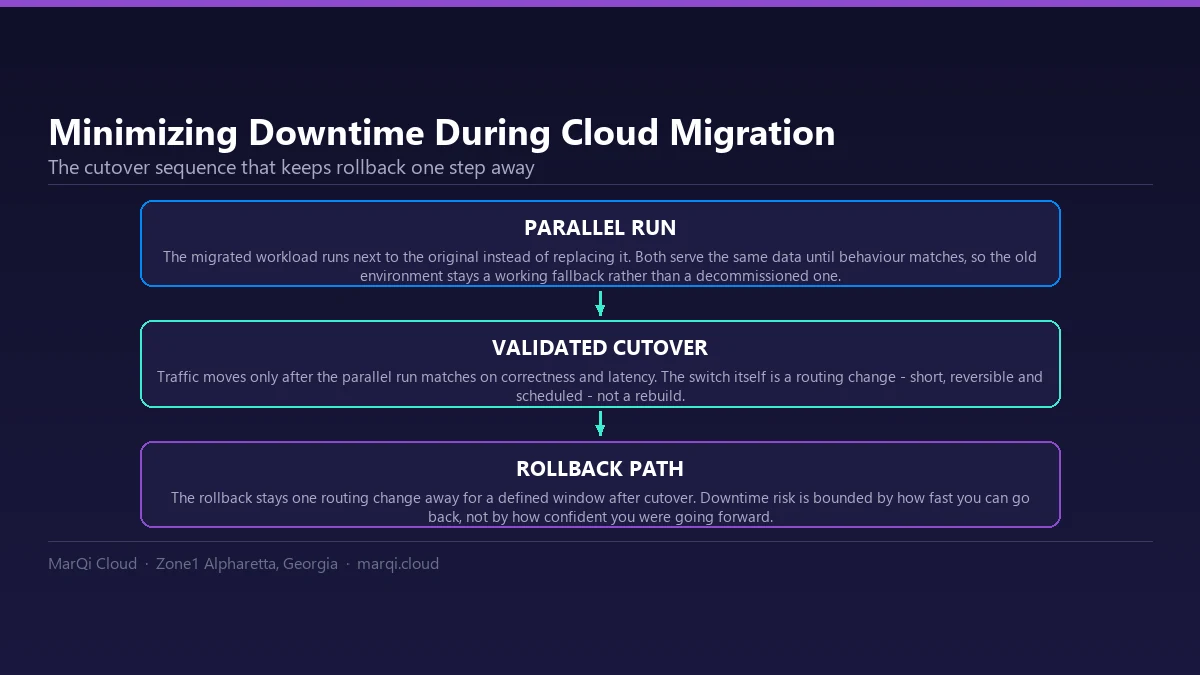
Run old and new environments in parallel until behaviour matches, lower DNS TTL a full cycle before cutover, migrate in waves instead of one big bang, and keep rollback to a single reversible step. Most migration downtime is a planning failure rather than a technical one.
Essential Strategies to Minimize Downtime During Enterprise Cloud Migration
Enterprise cloud migration is a critical process that organizations undergo to enhance scalability, flexibility, and overall efficiency. However, one of the most significant concerns during this transition is minimizing downtime, which can adversely affect business operations and customer satisfaction. In this comprehensive guide, we will explore proven strategies to ensure a seamless migration process and maintain business continuity while migrating to a cloud infrastructure.
Understanding Cloud Migration
Cloud migration involves transferring data, applications, and other business elements from on-premises infrastructure to cloud-based environments. This transition can be executed in several ways, including:
- Lift and Shift: Moving applications and data without significant changes.
- Refactoring: Modifying applications to optimize them for cloud environments.
- Rebuilding: Completely redesigning applications to leverage cloud-native features.
- Replacing: Substituting existing applications with cloud-based alternatives.
Importance of Minimizing Downtime
Minimizing downtime during an enterprise cloud migration is crucial for several reasons:
- Business Continuity: Downtime can disrupt operations and lead to lost revenue.
- Customer Satisfaction: Extended outages may frustrate customers and damage brand reputation.
- Cost Implications: Downtime can incur significant costs, from loss of productivity to potential penalties from service level agreements (SLAs).
Downtime during a migration is not a flat cost: for transactional systems it is measured per hour, and the figure varies enormously by industry.
Strategies for Minimizing Downtime During Cloud Migration
The most effective ways to minimize downtime during a cloud migration are thorough planning and assessment, choosing the right migration strategy, rehearsing in a staging environment, scheduling cutover during off-peak hours, automating repeatable steps, keeping stakeholders informed, and having a disaster recovery plan ready before the cutover begins.
Implementing effective strategies is essential to minimize downtime during cloud migration. Here are some key approaches:
1. Comprehensive Planning and Assessment
Before initiating the migration process, conduct a thorough assessment of your current IT infrastructure and business requirements. This includes:
- Identifying critical applications and data that require prioritization.
- Evaluating existing performance metrics to establish benchmarks.
- Understanding compliance and security requirements relevant to your industry.
2. Choose the Right Migration Strategy
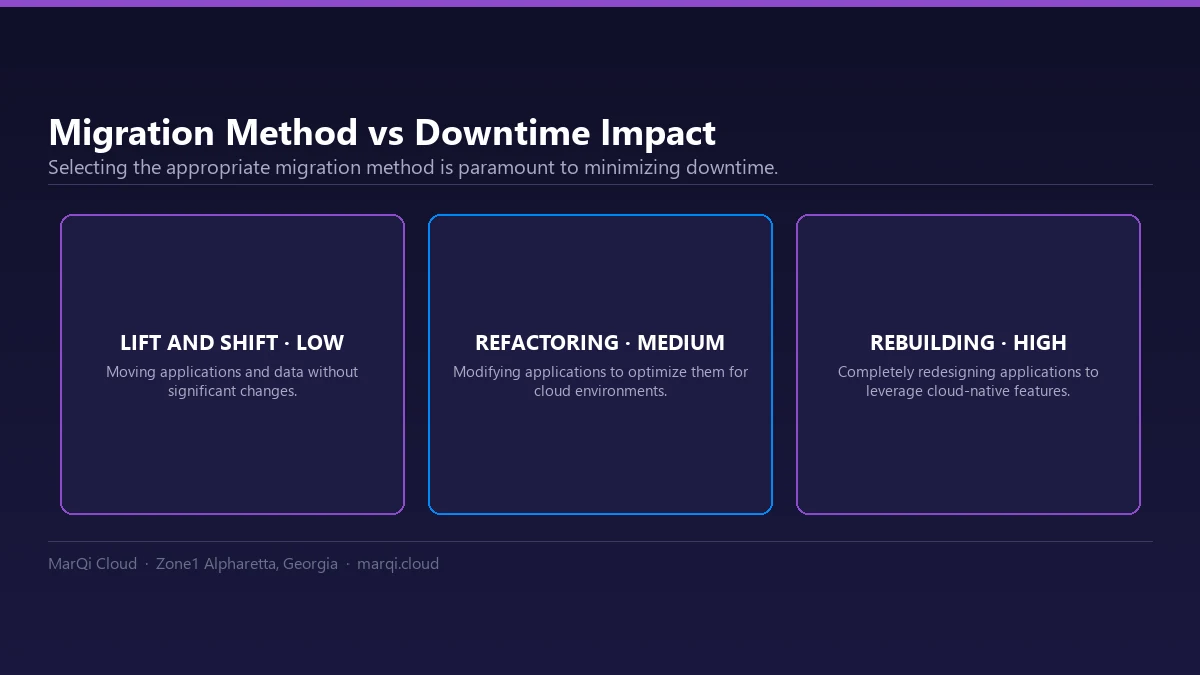
Selecting the appropriate migration method is paramount to minimizing downtime. For example:
| Migration Method | Best For | Downtime Impact |
|---|---|---|
| Lift and Shift | Minimal changes needed | Low |
| Refactoring | Optimizing performance | Medium |
| Rebuilding | Leveraging cloud-native features | High |
3. Implement a Staging Environment
Utilizing a staging environment allows for testing and validation of the migration process without affecting production systems. This approach minimizes risks and helps identify potential issues before going live.
4. Schedule Migration During Off-Peak Hours
Plan the migration during off-peak hours or weekends to reduce the impact on users. This timing ensures that the majority of your workforce is not disrupted during critical business hours.
5. Use Automation Tools
Automation tools can streamline the migration process and reduce human error. Solutions such as MarQi Cloud’s Managed Services offer automation capabilities that enhance efficiency and accuracy.
6. Continuous Communication
Maintain open lines of communication with stakeholders throughout the migration process. Informing users about expected downtime and progress updates can help manage expectations and minimize frustration.
7. Implement Disaster Recovery Solutions
Having a robust disaster recovery plan in place ensures that you can quickly restore services in the event of an unexpected outage. Consider solutions like MarQi Cloud’s Disaster Recovery services to safeguard your data.
Step-by-Step Guide to Cloud Migration
Here’s a detailed step-by-step guide to ensure a successful cloud migration with minimal downtime:
- Define Your Objectives: Clearly outline the goals of the migration project, including expected outcomes and performance metrics.
- Assess Your Environment: Conduct a complete inventory of applications, data, and infrastructure to identify dependencies and critical components.
- Select the Right Cloud Provider: Choose a reliable cloud provider, such as MarQi Cloud, that offers enterprise-grade cloud infrastructure and support services.
- Create a Migration Plan: Develop a roadmap detailing the migration process, timelines, and resource allocation.
- Test the Migration: Execute a pilot migration in a staging environment to identify issues and confirm the plan’s effectiveness.
- Execute the Migration: Begin the migration during off-peak hours, following the established plan and utilizing automation tools where possible.
- Monitor the Process: Continuously monitor performance and address any issues that arise in real-time.
- Post-Migration Review: After migration, conduct a thorough review to ensure all systems are functioning as expected and that performance benchmarks are met.
Common Challenges During Migration
Understanding potential challenges can help organizations proactively address them during the migration process:
- Data Loss: Without proper planning, critical data may be lost during the transition.
- Integration Issues: Integrating legacy systems with new cloud environments can be complex.
- Performance Degradation: Applications may experience performance issues during and after the migration.
- Compliance Risks: Failing to adhere to regulatory requirements can lead to legal ramifications.
Example Scenario: Applying These Strategies to a Regulated Workload
The following is an illustrative scenario, not a customer case study. Consider a healthcare organization planning to move patient-facing systems to a private cloud. Applying the strategies above would look like this:
- Downtime planning: Rehearse the cutover in a staging environment and schedule it for an off-peak window, so the interruption is limited to the final data sync rather than the whole move.
- Scalability: Size the target environment for current load plus expected growth, so capacity can expand after the move without a second migration.
- Compliance: Confirm before cutover which regulatory controls the target environment must meet, such as access logging and encryption at rest, and verify them during the staging rehearsal.
Frequently Asked Questions
1. What is cloud migration?
Cloud migration is the process of transferring data, applications, and other business elements from on-premises infrastructure to cloud-based environments.
2. How can I minimize downtime during cloud migration?
To minimize downtime, conduct thorough planning, choose the right migration strategy, implement a staging environment, and communicate effectively with stakeholders.
3. What are the common challenges during cloud migration?
Common challenges include data loss, integration issues, performance degradation, and compliance risks.
4. Why is a disaster recovery plan important during migration?
A disaster recovery plan ensures that you can quickly restore services in the event of an unexpected outage, minimizing downtime and data loss.
5. What role does automation play in cloud migration?
Automation tools streamline the migration process, reduce human error, and enhance efficiency.
6. When is the best time to schedule a migration?
Scheduling migration during off-peak hours or weekends can help minimize the impact on users and business operations.
7. How can I ensure compliance during cloud migration?
Understanding regulatory requirements and choosing a cloud provider that adheres to these standards is crucial for maintaining compliance.
8. What should I do after migration?
After migration, conduct a thorough review to ensure all systems are functioning as expected and that performance benchmarks are met.