Why Lift-and-Shift Migration Is Sometimes the Right First Step
July 16, 2026
Essential Strategies to Minimize Downtime During Enterprise Cloud Migration
July 16, 2026
What is refactoring in cloud migration, and when is it worth it?
Refactoring means changing an application's structure to use cloud primitives — managed services, horizontal scaling, externalised state — instead of lifting it as-is. It is the most expensive migration path and it pays back only where the application is strategic and its current architecture is the thing holding it back.
The Complete Guide to Application Refactoring During Cloud Migration
As organizations increasingly migrate to the cloud, understanding the intricacies of application refactoring becomes essential. This guide will delve into the importance of refactoring applications during cloud migration, outlining strategies, best practices, and the various approaches organizations can take to ensure a smooth transition. You’ll learn how to optimize your applications for cloud environments, enhance performance, and ultimately drive business value.
Understanding Application Refactoring
Application refactoring is the process of restructuring existing computer code without changing its external behavior. This practice is crucial during cloud migration as it enables organizations to optimize their applications for the cloud environment, ensuring scalability, performance, and cost-efficiency. Refactoring can involve various activities, including code cleanup, architecture redesign, and the integration of new technologies.
As a leading enterprise cloud provider, MarQi Cloud understands the complexities involved in application refactoring and offers tailored managed services to support organizations through this transformative journey.
Benefits of Application Refactoring
Refactoring applications during cloud migration offers numerous benefits, including:
- Improved Performance: Refactored applications are optimized for cloud environments, leading to enhanced speed and responsiveness.
- Scalability: By redesigning applications, organizations can better leverage cloud resources, allowing them to scale up or down as needed.
- Cost Efficiency: Optimized applications can reduce cloud resource consumption, leading to lower operational costs.
- Enhanced Security: Refactoring provides an opportunity to implement modern security protocols and practices, ensuring better data protection.
- Increased Agility: Refactored applications allow for quicker updates and feature releases, enabling organizations to respond rapidly to market changes.
Strategies for Refactoring Applications
When embarking on an application refactoring project, consider the following strategies:
1. Assess Current Applications
Before refactoring, conduct a thorough assessment of your existing applications. Identify which applications are critical for your business operations and evaluate their performance, architecture, and code quality. This assessment will help prioritize which applications should be refactored first.
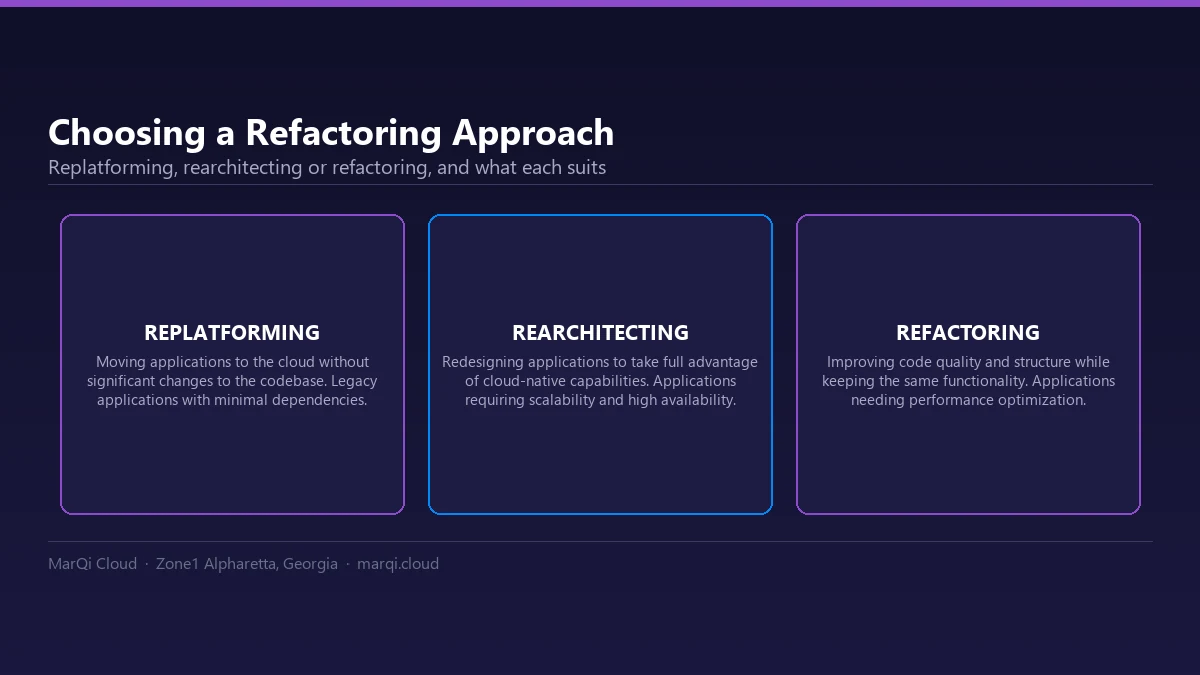
2. Choose the Right Refactoring Approach
There are several approaches to application refactoring, including:
| Refactoring Approach | Description | Best Suited For |
|---|---|---|
| Replatforming | Moving applications to the cloud without significant changes to the codebase. | Legacy applications with minimal dependencies. |
| Rearchitecting | Redesigning applications to take full advantage of cloud-native capabilities. | Applications requiring scalability and high availability. |
| Refactoring | Improving code quality and structure while keeping the same functionality. | Applications needing performance optimization. |
3. Leverage Automation Tools
Utilize automation tools to streamline the refactoring process. Tools like AWS CodeBuild and Azure DevOps can help automate testing, deployment, and monitoring, making it easier to manage your refactoring efforts.
4. Implement Agile Methodologies
Adopt Agile methodologies to enhance collaboration among development teams. Agile allows for iterative development, enabling teams to make incremental changes and continuously improve applications throughout the refactoring process.
5. Monitor and Optimize
After refactoring, continuously monitor application performance and usage. Utilize cloud-native monitoring tools to gather insights and optimize applications based on real-world usage patterns.
Common Challenges in Application Refactoring
While application refactoring offers many advantages, it is not without challenges. Some common hurdles include:
- Technical Debt: Legacy applications often contain technical debt, which can complicate the refactoring process.
- Resource Constraints: Limited development resources can hinder the ability to refactor applications effectively.
- Resistance to Change: Stakeholders may resist changes to existing applications, making it challenging to gain buy-in for refactoring initiatives.
- Compliance and Security Issues: Ensuring that refactored applications meet regulatory requirements can be complex, especially in regulated industries.
Best Practices for Successful Refactoring
To ensure a successful application refactoring process, follow these best practices:
1. Establish Clear Goals
Define clear objectives for your refactoring efforts. Whether it’s improving performance, reducing costs, or enhancing security, having specific goals will guide your strategy and decision-making.
2. Involve Stakeholders Early
Engage stakeholders early in the process to ensure alignment and support for refactoring initiatives. This collaboration can help address concerns and foster a culture of change.
3. Document Everything
Thoroughly document the refactoring process, including decisions made, challenges encountered, and lessons learned. This documentation can serve as a valuable resource for future projects.
4. Test Rigorously
Implement a comprehensive testing strategy to ensure that refactored applications function as intended. Automated testing tools can help streamline this process and identify issues early.
5. Leverage Expert Guidance
Consider partnering with experts in cloud migration and application refactoring. Organizations like MarQi Cloud offer infrastructure consulting services to help navigate the complexities of refactoring during migration.
Case Studies of Successful Refactoring
Several organizations have successfully refactored applications during their migration to the cloud. Here are a few notable examples:
Case Study 1: Healthcare Provider
By adopting a microservices architecture, they improved scalability and reduced downtime, resulting in a 30% increase in patient satisfaction.
Case Study 2: E-Commerce Business
An e-commerce business refactored its online shopping platform during migration to a hybrid cloud environment. By optimizing the application for cloud-native features, they achieved a 40% reduction in page load times and increased conversion rates by 25%.
Case Study 3: Financial Institution
A financial institution faced challenges with legacy applications that hindered their ability to innovate.
Frequently Asked Questions
What is application refactoring?
Application refactoring is the process of restructuring existing code without changing its external behavior, aimed at improving performance, maintainability, and scalability.
Why is refactoring important during cloud migration?
Refactoring is essential during cloud migration because it optimizes applications for cloud environments, enhancing performance, scalability, and cost-efficiency.
What are the main challenges of application refactoring?
Common challenges include technical debt, resource constraints, resistance to change, and compliance issues.
How can I ensure a successful refactoring process?
Establish clear goals, involve stakeholders early, document the process, test rigorously, and leverage expert guidance.
What are the benefits of refactoring applications?
Benefits include improved performance, scalability, cost efficiency, enhanced security, and increased agility.
What strategies should I use for application refactoring?
Consider assessing current applications, choosing the right refactoring approach, leveraging automation tools, implementing Agile methodologies, and continuously monitoring and optimizing.
How can MarQi Cloud help with application refactoring?
MarQi Cloud offers managed services and infrastructure consulting to support organizations through the application refactoring process during cloud migration.
Is there a difference between replatforming and rearchitecting?
Yes, replatforming involves moving applications to the cloud with minimal changes, while rearchitecting involves significant redesign to leverage cloud-native capabilities.
What tools can assist with application refactoring?
Tools such as AWS CodeBuild and Azure DevOps can help automate testing, deployment, and monitoring during the refactoring process.
How does application refactoring impact costs?
While refactoring may involve upfront costs, it often leads to long-term savings through improved performance and reduced resource consumption.
What role does documentation play in application refactoring?
Documentation is vital for tracking the refactoring process, decisions made, challenges encountered, and lessons learned, serving as a resource for future projects.
Can I refactor applications without migrating to the cloud?
Yes, refactoring can be done independently of cloud migration; however, cloud migration often provides an opportunity to optimize applications for cloud environments.
Conclusion
Application refactoring is a critical component of cloud migration, enabling organizations to optimize their applications for enhanced performance, scalability, and cost-efficiency. By understanding the benefits, strategies, and best practices associated with refactoring, businesses can navigate the complexities of cloud migration successfully. At MarQi Cloud, we are committed to providing the necessary infrastructure and support to help organizations achieve their cloud migration goals effectively.