The Ultimate IT Director’s Guide to Evaluating Cloud Infrastructure Providers Beyond the Big Three
July 9, 2026
Why Private Cloud Hosting Is Essential for Regulated Industries
July 9, 2026
How Hybrid Cloud Architecture Solves Key Challenges for Growing Businesses
In today’s fast-paced and ever-evolving business landscape, organizations are constantly seeking innovative solutions to meet their operational needs while remaining competitive. As companies grow, they face a myriad of challenges, particularly in managing their IT infrastructure efficiently. One of the most effective solutions that has emerged is hybrid cloud architecture. This approach not only addresses scalability and flexibility concerns but also enhances security, cost management, and compliance—key factors that growing businesses need to thrive. In this article, we will explore how hybrid cloud architecture solves the biggest challenges for growing businesses, providing insights and actionable tips along the way.
Understanding Hybrid Cloud Architecture
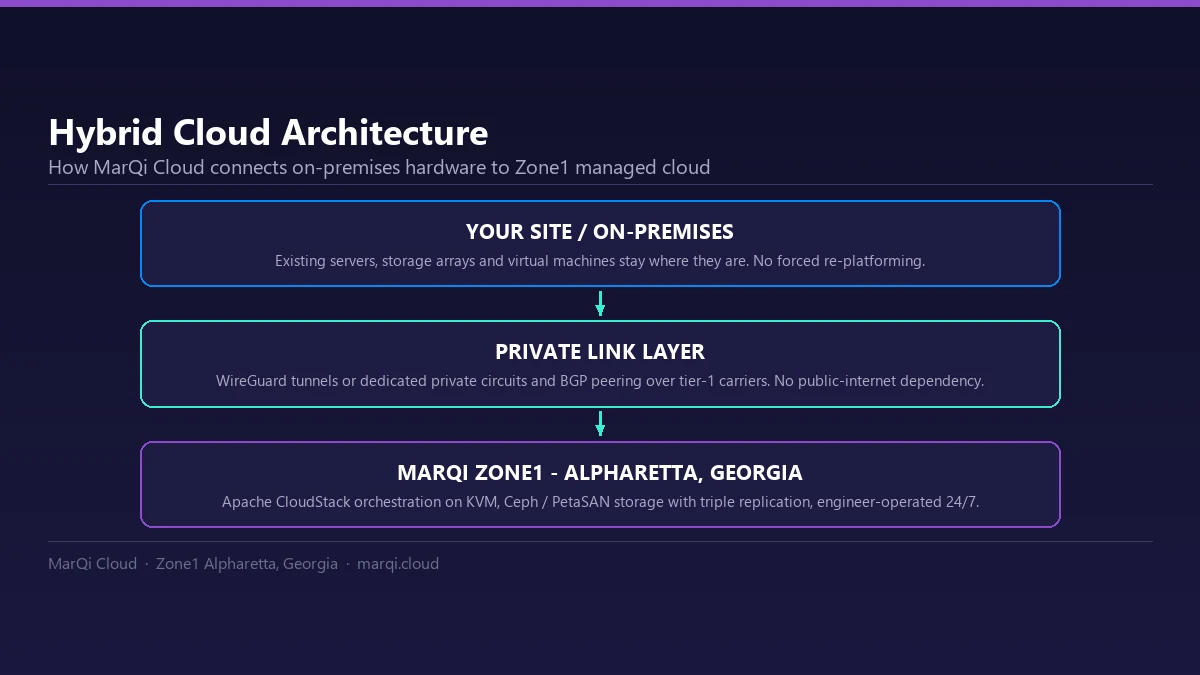
Hybrid cloud architecture refers to the integration of public and private cloud environments, allowing businesses to leverage the advantages of both. This architecture enables organizations to maintain sensitive data on a private cloud while utilizing the scalability and cost-effectiveness of public cloud resources. Most organizations have adopted hybrid cloud solutions, highlighting the growing trend towards this flexible infrastructure model.
By utilizing hybrid cloud architecture, businesses can optimize their workloads, enhance disaster recovery capabilities, and maintain compliance with industry regulations. The ability to dynamically allocate resources based on demand also allows organizations to respond swiftly to changing market conditions.
The Growing Needs of Businesses
As businesses scale, their IT needs evolve. The increasing demand for digital services, coupled with the rise of remote work, necessitates a robust and adaptable IT infrastructure. Growing businesses often find themselves grappling with several challenges, including:
- Scalability: As companies expand, they require IT resources that can scale rapidly to accommodate increased workloads.
- Cost Management: Balancing operational costs while investing in technology can be challenging for growing organizations.
- Data Security: Protecting sensitive information is paramount, especially in industries subject to stringent regulations.
- Compliance: Businesses must ensure they meet industry standards and legal requirements, which can be complex and time-consuming.
- Performance: Maintaining optimal performance levels is critical to ensure customer satisfaction and operational efficiency.
Key Challenges Faced by Growing Businesses
Growing businesses often encounter multiple challenges that can hinder their progress. Understanding these challenges is crucial for identifying effective solutions. Here are some of the most common issues:
1. Resource Constraints
Many growing businesses operate on tight budgets and limited IT resources. This can lead to difficulties in managing IT infrastructure effectively. The lack of in-house expertise may also hinder the ability to implement and maintain complex cloud solutions.
2. Data Management
With the exponential growth of data, businesses must find ways to store, manage, and analyze information efficiently. This is especially true for organizations that rely on data analytics for decision-making.
3. Security Risks
As businesses expand, they become more vulnerable to cyber threats. Ensuring robust security measures are in place is essential to protect sensitive data and maintain customer trust.
4. Compliance Challenges
Regulatory compliance can be a significant burden for growing businesses, especially in heavily regulated industries such as healthcare and finance. Navigating the complexities of compliance can divert resources away from core business activities.
Benefits of Hybrid Cloud Solutions
Hybrid cloud architecture offers a range of benefits that help address the challenges faced by growing businesses. Here are some of the key advantages:
1. Enhanced Scalability
Hybrid cloud solutions allow businesses to scale their IT resources up or down based on demand. This flexibility enables organizations to respond quickly to changing market conditions without incurring unnecessary costs.
2. Cost Efficiency
By leveraging a combination of public and private cloud resources, businesses can optimize their IT spending. Organizations can keep sensitive data on private clouds while utilizing cheaper public cloud resources for less critical workloads. This approach minimizes costs while maximizing performance.
3. Improved Security
With hybrid cloud architecture, businesses can maintain sensitive data in a private cloud environment, reducing the risk of exposure to cyber threats. Additionally, many hybrid cloud providers offer advanced security features, such as encryption and multi-factor authentication, to protect data.
4. Compliance and Control
Hybrid cloud solutions allow businesses to maintain compliance with industry regulations while having greater control over their data. Organizations can choose where to store their data based on compliance requirements, ensuring they meet legal obligations.
5. Disaster Recovery and Business Continuity
Hybrid cloud solutions enhance disaster recovery capabilities by allowing businesses to back up critical data across multiple environments. This ensures that data can be restored quickly in the event of a failure, minimizing downtime and disruption.
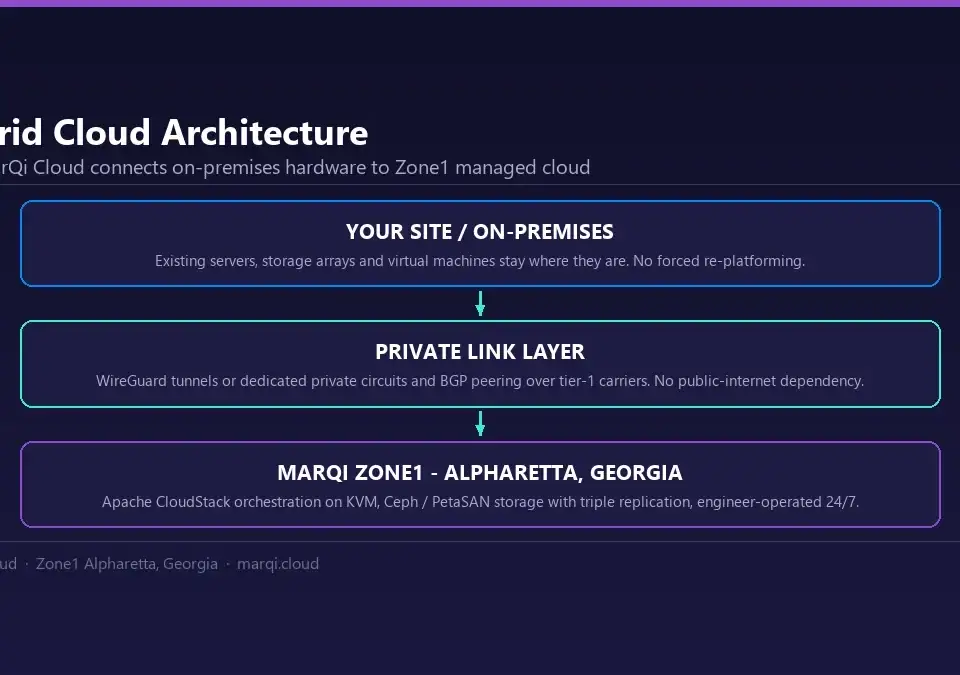
How MarQi Cloud Implements Hybrid Cloud Architecture
At MarQi Cloud, we specialize in providing enterprise-grade hybrid cloud solutions tailored to the needs of growing businesses. Our offerings include:
- Flexible Hybrid Deployments: We enable organizations to deploy hybrid cloud models that suit their unique requirements, ensuring optimal performance and cost efficiency.
- Secure Hosting Environments: Our private cloud solutions provide the security and compliance necessary for sensitive workloads, while our public cloud resources offer scalability.
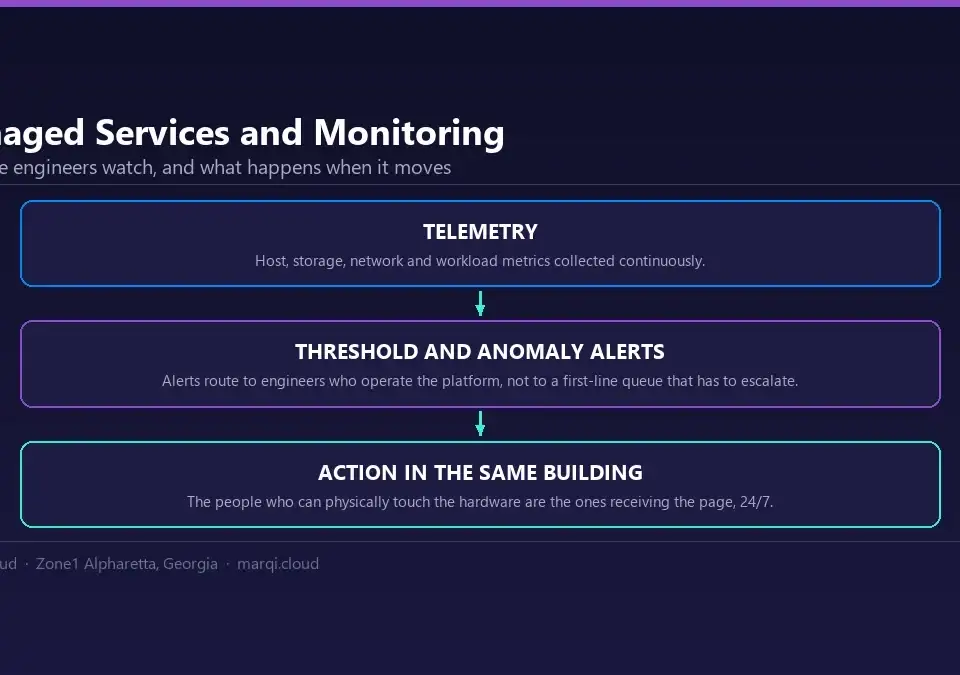
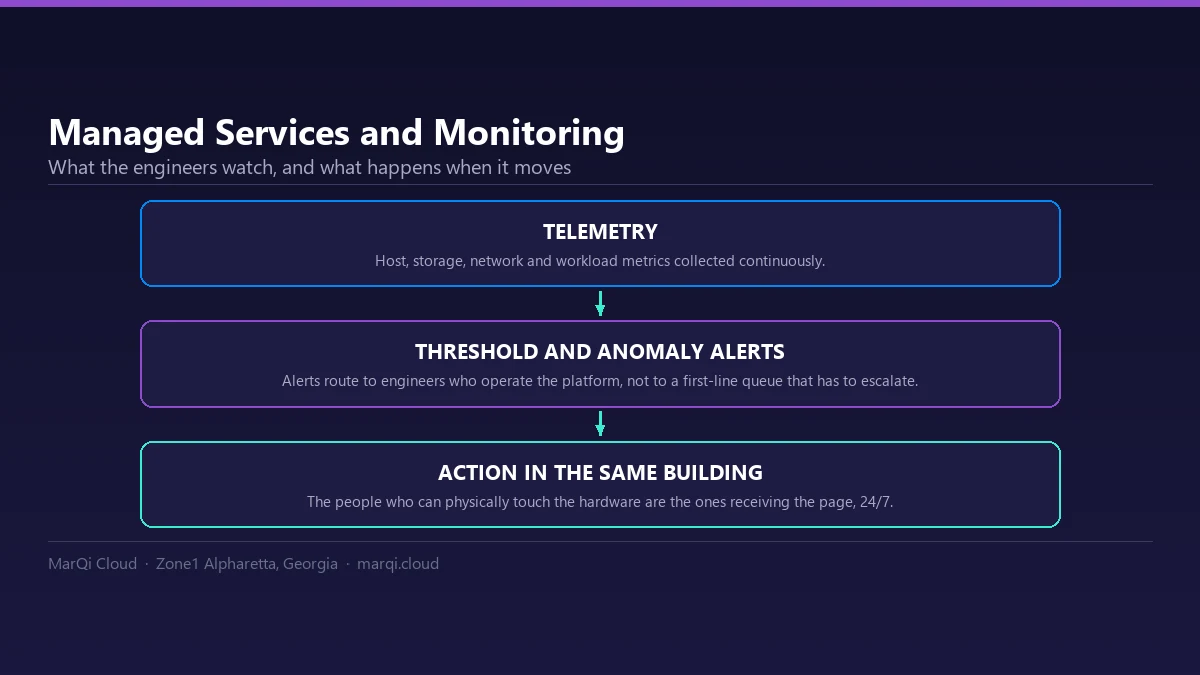
- Managed Services: Our white-glove managed services ensure that your hybrid cloud infrastructure is maintained and optimized for performance, allowing you to focus on your core business.
- Disaster Recovery Solutions: With our robust disaster recovery offerings, businesses can ensure business continuity and safeguard critical data against unforeseen events.
Case Studies: Success Stories of Hybrid Cloud Adoption
To illustrate the effectiveness of hybrid cloud solutions, let’s explore a few case studies of organizations that have successfully implemented hybrid cloud architecture:
Case Study 1: A Healthcare Provider
A mid-sized healthcare provider faced challenges with data management and compliance. By adopting a hybrid cloud solution, they were able to store sensitive patient data on a private cloud while utilizing public cloud resources for non-sensitive workloads. This approach not only improved data security but also reduced operational costs by 30%.
Case Study 2: A Fintech Startup
A fintech startup needed to scale rapidly to meet increasing customer demand. By leveraging MarQi Cloud’s hybrid infrastructure, they were able to scale their resources dynamically, ensuring optimal performance during peak times. This flexibility contributed to a 50% increase in customer satisfaction ratings.
Case Study 3: A SaaS Company
A SaaS company required a solution that would allow them to handle fluctuating workloads without incurring high costs. By utilizing a hybrid cloud model, they were able to achieve significant cost savings while maintaining high availability and performance for their users.
Expert Tips for Implementing Hybrid Cloud Solutions
Implementing a hybrid cloud architecture can be complex, but with the right approach, businesses can reap significant rewards. Here are some expert tips:
- Assess Your Current Infrastructure: Before migrating to a hybrid cloud model, evaluate your existing infrastructure to identify gaps and opportunities for improvement.
- Choose the Right Provider: Select a cloud provider that offers the necessary features, support, and security measures to meet your organization’s needs. At MarQi Cloud, we offer tailored solutions designed specifically for growing businesses.
- Develop a Migration Plan: Create a detailed migration plan that outlines the steps required to move workloads to the hybrid cloud. This should include timelines, resource allocation, and risk assessments.
- Monitor and Optimize: Continuously monitor your hybrid cloud environment to ensure optimal performance. Use analytics tools to gain insights into resource usage and identify areas for improvement.
Frequently Asked Questions
1. What is hybrid cloud architecture?
Hybrid cloud architecture is a model that combines public and private cloud environments, allowing organizations to leverage the benefits of both while maintaining control over sensitive data.
2. What are the benefits of using hybrid cloud solutions?
Hybrid cloud solutions offer enhanced scalability, cost efficiency, improved security, compliance control, and disaster recovery capabilities.
3. How does hybrid cloud architecture help with data security?
By keeping sensitive data on a private cloud and utilizing public cloud resources for less critical workloads, hybrid cloud architecture reduces exposure to cyber threats.
4. Can small businesses benefit from hybrid cloud solutions?
Yes, hybrid cloud solutions are particularly beneficial for small businesses as they provide scalability and cost efficiency without compromising on security.
5. How do I choose the right cloud provider for hybrid cloud architecture?
Consider factors such as the provider’s experience, security features, support options, and the ability to customize solutions to fit your business needs.
6. Is it difficult to migrate to a hybrid cloud environment?
Migrating to a hybrid cloud environment can be complex, but with a well-planned migration strategy and the right support, businesses can achieve a smooth transition.
7. What industries benefit the most from hybrid cloud solutions?
Industries such as healthcare, finance, and technology often benefit the most from hybrid cloud solutions due to their specific data security and compliance requirements.
8. How can I ensure compliance in a hybrid cloud environment?
To ensure compliance, organizations should choose a hybrid cloud provider that offers features such as data encryption, access controls, and regular audits to meet industry regulations.