Why Dedicated Cloud Resources Outperform Shared Tenancy for Mission-Critical Applications
July 11, 2026
Flexible Pricing Models: Aligning Infrastructure Costs with Business Growth at MarQi Cloud
July 11, 2026
The Complete Guide to Cloud Network Architecture for Enterprise Deployments
Enterprise cloud network architecture is the design of how an organization’s cloud networks are segmented, addressed, secured and connected to on-premises sites, covering VPCs or VLANs, routing, firewalls and private links. This guide aims to provide a comprehensive overview of cloud network architecture, including its components, best practices, and how to effectively implement it for your enterprise. Whether you’re considering a transition to cloud solutions or looking to optimize your existing infrastructure, this resource will equip you with the knowledge you need to succeed. We will delve into essential aspects such as security, scalability, and performance, all while emphasizing how MarQi Cloud can facilitate a seamless transition.
What is Cloud Network Architecture?
Cloud network architecture refers to the design and structure of the network components that facilitate the delivery of cloud services. It encompasses the hardware, software, protocols, and services that allow for cloud computing and storage solutions. This architecture is critical for enterprises as it dictates how data flows between systems, how resources are allocated, and how security is maintained. The architecture can be broadly divided into three layers: the front-end, the back-end, and the cloud delivery model.
Key Components of Cloud Network Architecture
Understanding the key components of cloud network architecture is vital for effective implementation. Here are the primary elements:
- Network Infrastructure: This includes the physical and virtual resources such as routers, switches, and firewalls that make up the network.
- Data Storage: Cloud storage solutions can be categorized into object storage, block storage, and file storage, each serving different use cases. For a deeper understanding of these storage types, refer to our article on Object Storage vs. Block Storage vs. File Storage.
- Cloud Management Software: Tools that help manage resources, monitor performance, and automate processes.
- Security Protocols: Security measures such as encryption, access controls, and compliance protocols that ensure data integrity and protection.
- APIs: Application Programming Interfaces facilitate communication between different software applications and services.
Benefits of Cloud Network Architecture
Implementing a robust cloud network architecture offers several advantages for enterprises:
- Scalability: Easily scale resources up or down based on demand, allowing for flexibility in operations.
- Cost Efficiency: Reduce capital expenditures by leveraging pay-as-you-go pricing models, which eliminate the need for large upfront investments.
- Performance Optimization: Enhanced performance through optimized resource allocation and reduced latency.
- Improved Security: Advanced security protocols and regular updates protect sensitive data and comply with industry regulations.
- Business Continuity: Robust disaster recovery solutions ensure data is backed up and accessible during outages.
Best Practices for Designing Cloud Network Architecture
When designing your cloud network architecture, consider the following best practices:
- Assess Your Needs: Analyze your organization’s specific requirements to determine the type of cloud solution that fits best. This may include hybrid cloud solutions for distributed organizations, which MarQi Cloud specializes in.
- Implement Security by Design: Security should be integrated into every layer of your architecture. This includes using secure access protocols and encryption methods.
- Optimize for Performance: Monitor performance metrics regularly and adjust resources as necessary to maintain optimal performance. Utilize MarQi Cloud’s performance-driven infrastructure design to enhance your operations.
- Utilize Automation: Leverage automation tools to streamline processes and reduce manual intervention, which can lead to errors.
- Regularly Review Your Architecture: Conduct periodic reviews and audits of your cloud architecture to ensure it meets evolving business needs and compliance standards. Our Infrastructure Audit can help optimize your stack for future growth.
How MarQi Cloud Can Help
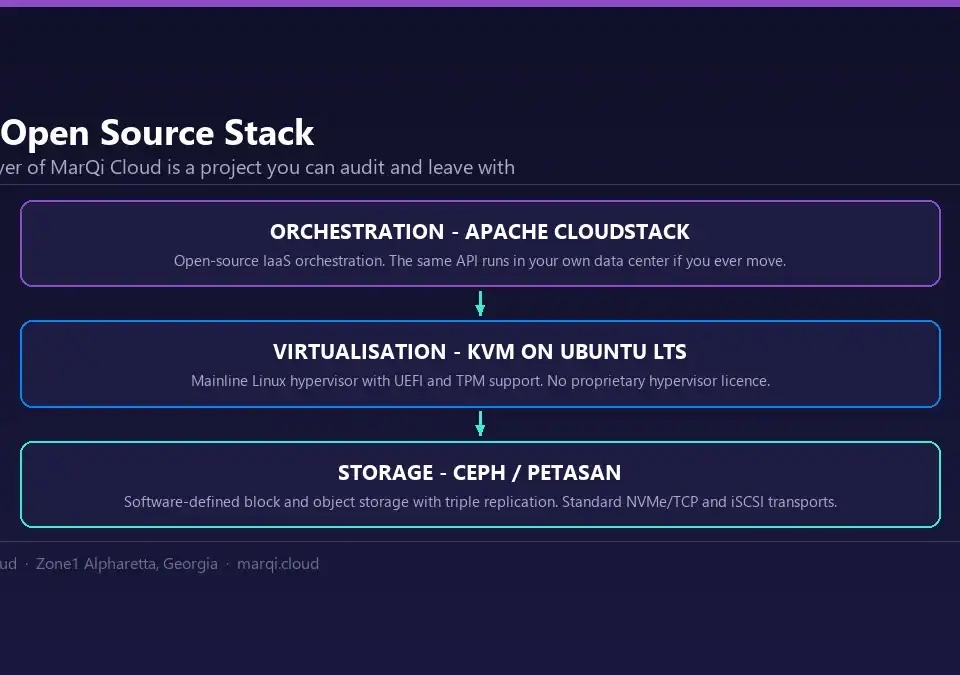
MarQi Cloud stands out as a leading enterprise cloud provider that specializes in hybrid cloud solutions tailored for mid-size to enterprise-level organizations. Our offerings include:
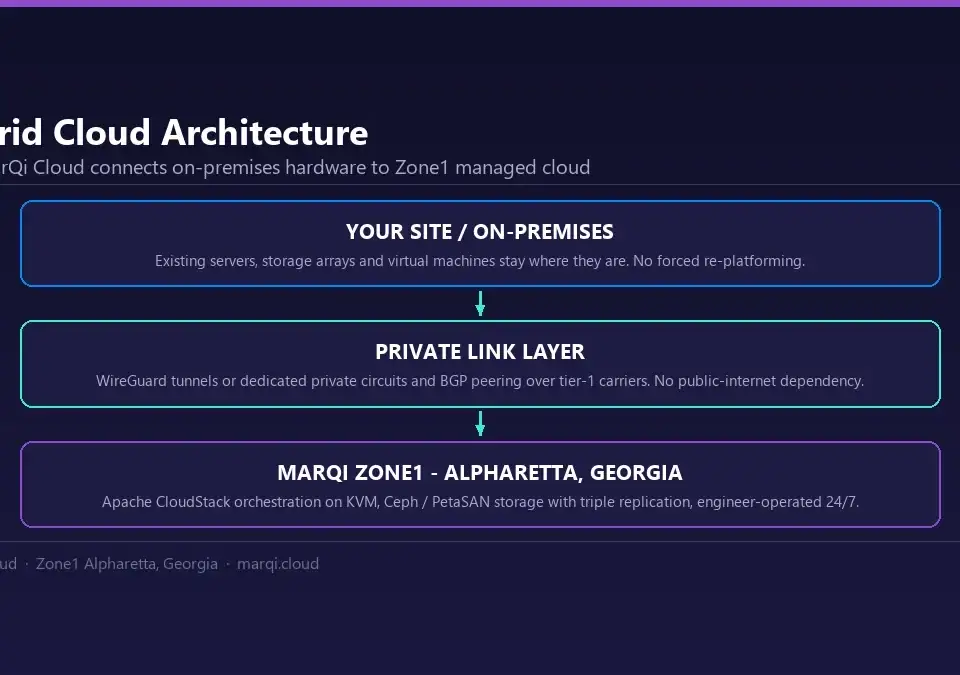
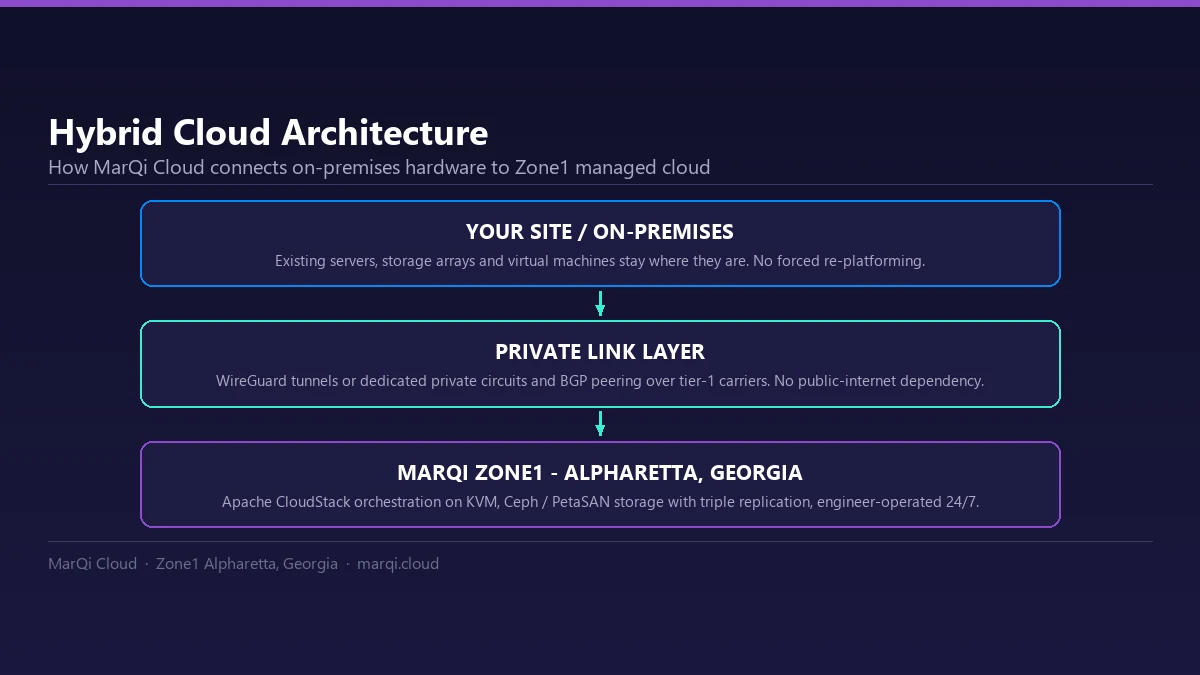
- Hybrid Cloud Infrastructure: Seamlessly integrate your on-premise servers with our cloud services for a hybrid solution that meets your unique needs. Learn more about integrating on-premise servers with MarQi Cloud.
- Private Cloud Solutions: Build a secure, dedicated environment for your sensitive data.
- Disaster Recovery Solutions: Ensure your business continuity with our comprehensive disaster recovery strategies. For an in-depth view, check out our article on how we handle disaster recovery.
- Performance-Driven Infrastructure: Our infrastructure is designed to optimize performance and scalability simultaneously, ensuring your applications run smoothly.
- Expert Consultation: Our team of infrastructure architects and cloud engineers provide white-glove managed services to assist you throughout your cloud journey.
Comparison of Cloud Network Providers
| Provider | Hybrid Solutions | Performance | Security | Support |
|---|---|---|---|---|
| MarQi Cloud | Yes | High | Enterprise-grade | 24/7 |
| AWS | Limited | High | Standard | Business hours |
| Azure | Yes | Medium | Standard | Business hours |
As illustrated in the table, MarQi Cloud excels in providing hybrid solutions with high performance and enterprise-grade security, backed by 24/7 support. This positions us as a reliable choice for organizations seeking to optimize their cloud network architecture.
FAQ
What is cloud network architecture?
Cloud network architecture refers to the design and structure of network components that deliver cloud services, including hardware, software, and protocols.
Why is cloud network architecture important for enterprises?
It ensures efficient data flow, resource allocation, and security in cloud computing, crucial for maintaining business operations and compliance.
What are the key components of cloud network architecture?
The main components include network infrastructure, data storage solutions, cloud management software, security protocols, and APIs.
How can I improve my cloud network architecture?
Assess your needs, implement security by design, optimize for performance, utilize automation, and regularly review your architecture.
What benefits does cloud network architecture offer?
Benefits include scalability, cost efficiency, performance optimization, improved security, and business continuity.
How does MarQi Cloud support enterprise cloud architecture?
MarQi Cloud provides tailored hybrid cloud solutions, private cloud options, disaster recovery services, and expert consultation to optimize your cloud journey.
What are the common challenges in cloud network architecture?
Common challenges include security vulnerabilities, performance bottlenecks, integration complexities, and managing costs effectively.
What are the best practices for cloud network architecture?
Best practices include assessing needs, implementing security by design, optimizing for performance, utilizing automation, and conducting regular reviews.