How MarQi Cloud’s Zero Lock-In Philosophy Protects Your Technology Investments
July 12, 2026
How Enterprise Hosting Environments Differ from Standard Cloud Instances
July 13, 2026
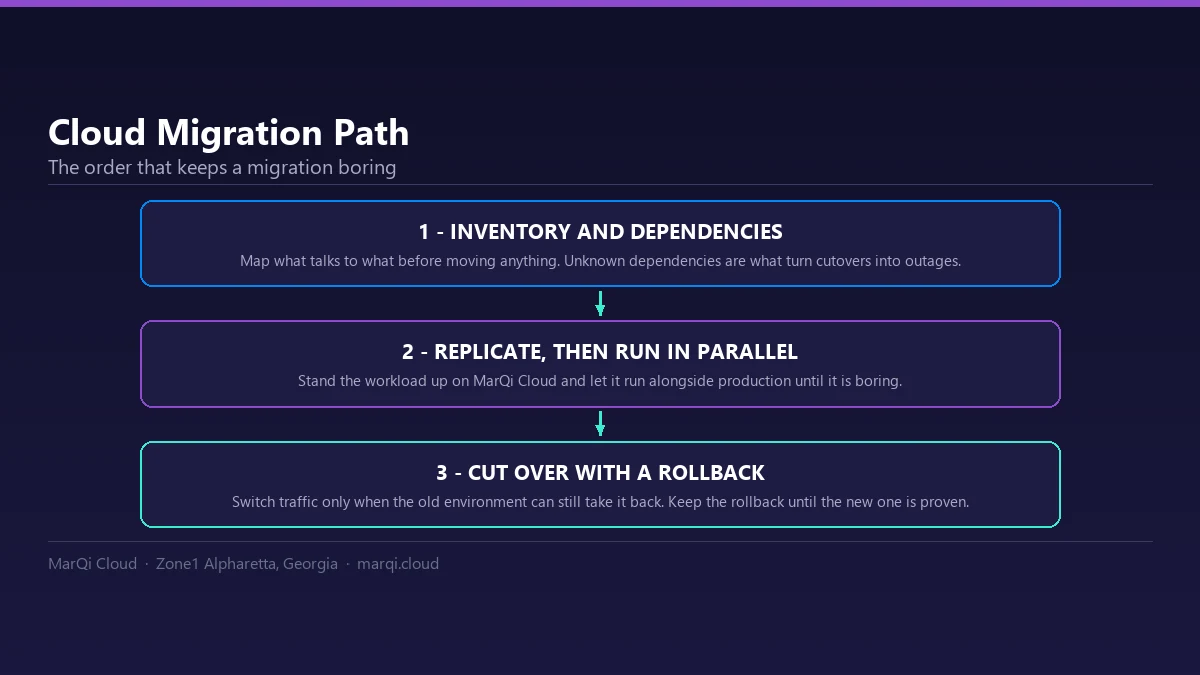
What goes into a business case for cloud migration?
Four numbers: current total cost including hardware refresh, power, licences and staff time; the projected run cost after migration; the one-off cost of migrating; and the cost of doing nothing. Present a payback period rather than a percentage saving — finance approves timelines, not adjectives.
The Ultimate Guide to Building a Business Case for Cloud Infrastructure Migration
In today’s digital landscape, cloud infrastructure migration has become a pivotal strategy for businesses looking to enhance agility, reduce costs, and improve overall operational efficiency. As an IT leader, crafting a compelling business case for such a migration is essential to gain the necessary buy-in from stakeholders and navigate the complexities involved. This comprehensive guide aims to provide you with the insights, data, and actionable steps needed to build an effective business case for cloud infrastructure migration.
Understanding Cloud Infrastructure
Cloud infrastructure refers to the collection of hardware and software components that enable cloud computing services. This infrastructure includes servers, storage, networking, and virtualization technologies, all of which are essential for delivering cloud services to users. When considering a migration to cloud infrastructure, it’s crucial to understand the different types of cloud models available, including public, private, and hybrid clouds. Each model offers unique advantages and challenges that can significantly impact your business.
Types of Cloud Models
- Public Cloud: Resources are shared among multiple organizations and managed by third-party providers.
- Private Cloud: Dedicated resources for a single organization, offering enhanced security and control.
- Hybrid Cloud: A combination of public and private clouds, allowing for greater flexibility and scalability.
Benefits of Cloud Migration
Cloud migration offers numerous benefits that can enhance business operations. These benefits include:
- Cost Efficiency: By migrating to the cloud, organizations can reduce their capital expenditures associated with managing on-premises infrastructure. This shift enables businesses to only pay for the resources they consume.
- Scalability: Cloud infrastructure allows businesses to scale resources up or down based on demand, providing the flexibility necessary to respond to changing market conditions.
- Performance and Reliability: Cloud providers often deliver higher levels of performance and reliability than traditional on-premises solutions, ensuring that applications run smoothly and efficiently.
- Enhanced Security: Leading cloud providers invest heavily in security measures, providing robust protection for sensitive data.
To delve deeper into the security aspects of cloud migration, consider reading our article on Cloud Security in 2026.
Building Your Business Case
When building a business case for cloud infrastructure migration, it’s essential to clearly articulate the reasons for the transition and the expected outcomes. Here’s a step-by-step approach to guide you through this process:
1. Define Objectives and Goals
Start by identifying the primary objectives for migrating to the cloud. These may include:
- Improving operational efficiency
- Reducing IT costs
- Enhancing data security
- Facilitating business continuity
2. Conduct a Current State Assessment
Evaluate your organization’s existing infrastructure, applications, and processes. This assessment should help you identify inefficiencies and areas for improvement.
3. Identify Stakeholders
Engage key stakeholders, including IT teams, business leaders, and finance departments, to gather insights and ensure alignment on objectives. Stakeholder buy-in is critical for a successful migration.
4. Develop a Cost-Benefit Analysis
Prepare a detailed cost-benefit analysis that outlines the expected costs of migration versus the anticipated benefits. This analysis should include:
| Cost Factors | Estimated Costs |
|---|---|
| Migration Costs | $XX,XXX |
| Ongoing Cloud Costs | $XX,XXX/year |
| Potential Savings | $XX,XXX/year |
5. Highlight Risks and Mitigation Strategies
Identify potential risks associated with the migration and outline strategies to mitigate them. This may include data loss, downtime, or compliance issues.
6. Create a Migration Timeline
Develop a realistic timeline for the migration process, including key milestones and deadlines. Ensure that this timeline aligns with business objectives.
7. Prepare the Final Business Case Document
Compile all the information into a comprehensive business case document. This document should present a compelling narrative that clearly outlines the benefits, costs, and strategic importance of migrating to cloud infrastructure.
Key Considerations for Migration
Before proceeding with cloud migration, there are several critical considerations to take into account:
- Compliance and Regulations: Ensure that your cloud solution complies with industry regulations and standards, such as HIPAA for healthcare or GDPR for data protection.
- Data Security: Evaluate the security measures implemented by your cloud provider to safeguard sensitive data.
- Vendor Lock-in: Consider the implications of vendor lock-in and explore options that provide flexibility and interoperability.
For a deeper understanding of how MarQi Cloud’s open-source stack provides full infrastructure visibility, check out our article on Open Source Cloud Benefits.
Cost Analysis of Cloud Infrastructure
Conducting a thorough cost analysis is crucial for making informed decisions regarding cloud migration. This analysis should encompass both direct and indirect costs.
Direct Costs
- Cloud service subscriptions
- Data transfer fees
- Training and support costs
Indirect Costs
- Potential downtime during migration
- Impact on team productivity
- Long-term maintenance and management costs
Disaster Recovery and Business Continuity
One of the primary reasons organizations migrate to cloud infrastructure is to enhance disaster recovery and business continuity capabilities. Cloud solutions can provide robust backup and recovery options that are often more reliable than traditional methods.
Business Continuity Planning
When developing your business continuity plan, consider the following:
- Identify critical business functions and processes.
- Establish recovery time objectives (RTO) and recovery point objectives (RPO).
- Test and update your plan regularly.
Example Scenarios of Migrations
The scenarios below are illustrative examples of how organizations typically apply these practices; they do not describe specific MarQi Cloud customers or measured results.
Example Scenario 1: Healthcare Provider
A mid-sized healthcare provider migrated to a hybrid cloud solution, resulting in improved patient data security and compliance with HIPAA regulations. By leveraging cloud infrastructure, they reduced IT costs within the first year.
Example Scenario 2: E-commerce Company
An e-commerce company transitioned to a public cloud model, enhancing their website’s performance during peak shopping seasons. This migration led to a reduction in downtime and an increase in customer satisfaction ratings.
Frequently Asked Questions
1. What is cloud infrastructure migration?
Cloud infrastructure migration refers to the process of transferring data, applications, and other business elements from on-premises servers to a cloud-based environment.
2. Why should businesses migrate to the cloud?
Businesses migrate to the cloud for numerous reasons, including cost savings, scalability, improved performance, and enhanced security.
3. What are the risks associated with cloud migration?
Risks may include data loss, downtime, compliance issues, and vendor lock-in.
4. How long does a cloud migration take?
The duration of a cloud migration can vary significantly based on the size and complexity of the organization, ranging from weeks to several months.
5. What is the difference between public, private, and hybrid clouds?
Public clouds are shared resources, private clouds are dedicated to a single organization, and hybrid clouds combine both models for added flexibility.
6. How do I assess the costs of cloud migration?
Conduct a detailed cost-benefit analysis that considers both direct and indirect costs associated with the migration process.
7. What role does data security play in cloud migration?
Data security is critical during cloud migration, as organizations must ensure that sensitive information is protected throughout the process.
8. How can I ensure compliance during migration?
Work with cloud providers that offer compliance support and ensure that your migration strategy aligns with industry regulations.