The Complete Guide to Designing a Hybrid Cloud Strategy for Enterprise Workloads
July 24, 2026
How to Connect On-Premise Data Centers to Cloud Infrastructure Securely
July 24, 2026
Why Hybrid Cloud Is a Permanent Architecture Choice for Modern Businesses
In today’s rapidly evolving digital landscape, businesses are increasingly recognizing the value of hybrid cloud solutions. Contrary to the common perception that hybrid cloud is merely a transitional state, it has emerged as a permanent architectural choice that offers unparalleled flexibility, scalability, and security. This article delves into the reasons why hybrid cloud is not just a phase, but a strategic and essential component of modern IT infrastructure.
What is Hybrid Cloud?
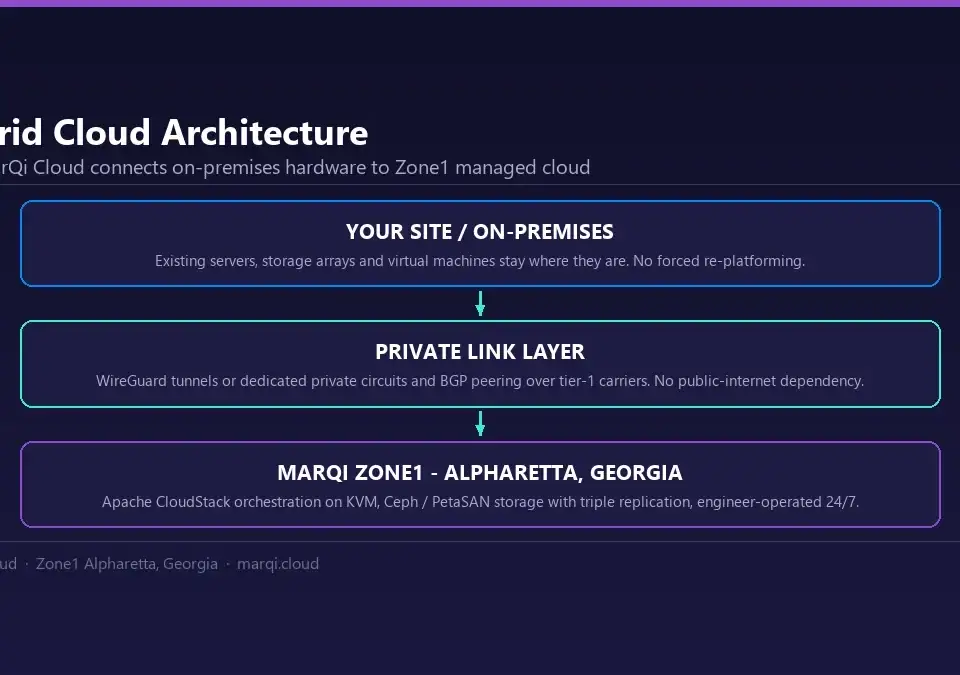
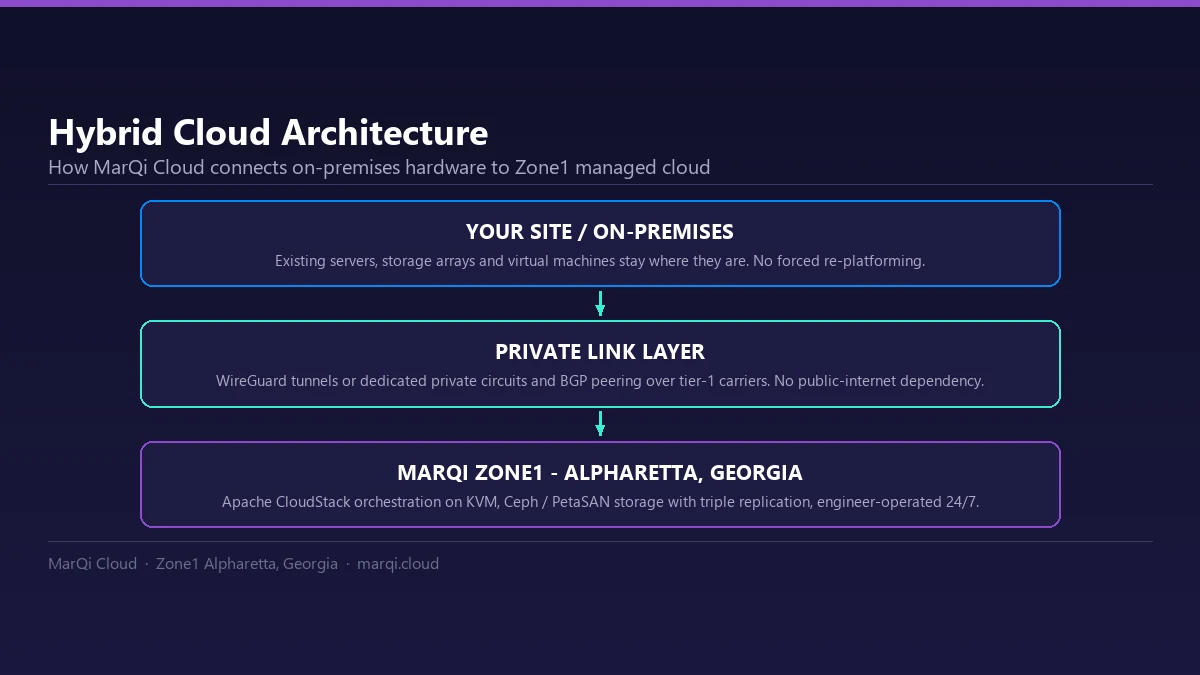
Hybrid cloud is an IT architecture that combines public cloud services with private cloud infrastructure, allowing organizations to take advantage of both deployment models. This architecture enables businesses to maintain sensitive data in a private environment while leveraging the scalability and cost-effectiveness of public cloud resources. Hybrid cloud has been adopted broadly across organizations, underscoring its growing importance in enterprise IT strategy.
Why Hybrid Cloud Is a Permanent Architecture Choice
Hybrid cloud is not just a temporary solution; it presents a permanent architecture choice for several compelling reasons:
- Flexibility and Scalability: Hybrid cloud allows businesses to scale their resources according to demand. This flexibility is crucial for organizations that experience fluctuating workloads, especially during peak seasons.
- Cost Efficiency: By utilizing a hybrid model, companies can optimize their cloud spending. They can keep critical workloads on private clouds while offloading less sensitive tasks to more affordable public clouds.
- Enhanced Security: With a hybrid cloud, organizations can maintain control over sensitive data by keeping it on private servers while still benefiting from the public cloud’s capabilities.
- Compliance and Regulatory Needs: Many industries are subject to strict data compliance regulations. A hybrid cloud model allows companies to store sensitive data in a compliant manner while taking advantage of public cloud services for less sensitive operations.
- Business Continuity and Disaster Recovery: Hybrid clouds offer robust disaster recovery solutions by enabling data replication across multiple environments, ensuring business continuity in the event of an outage.
Benefits of Hybrid Cloud
The benefits of hybrid cloud architecture extend beyond mere operational efficiencies. Here are some of the key advantages:
1. Improved Performance
Hybrid cloud solutions often lead to enhanced performance as organizations can distribute workloads across multiple environments. For instance, high-performance computing tasks can be executed on private clouds, while less demanding applications can run on public clouds, optimizing resource utilization.
2. Increased Agility
Organizations can respond quickly to market changes and customer demands with hybrid cloud solutions. The ability to scale resources up or down as needed allows businesses to remain agile and competitive.
3. Innovation and Development
With hybrid cloud, IT teams can experiment with new technologies and applications without risking the stability of the primary infrastructure. This fosters innovation and accelerates the development cycle.
4. Seamless Integration
Many hybrid cloud solutions offer seamless integration capabilities with existing on-premises systems, allowing organizations to leverage their current investments while transitioning to the cloud. This is particularly beneficial for businesses that require a gradual migration approach.
5. Vendor Independence
Adopting a hybrid cloud strategy can help organizations avoid vendor lock-in. By diversifying their cloud services, companies can negotiate better pricing and terms with multiple providers.
Challenges of Hybrid Cloud and How to Overcome Them
While hybrid cloud offers numerous benefits, it is not without its challenges. Here are some common issues organizations face and strategies to overcome them:
1. Complexity in Management
Managing a hybrid cloud environment can be complex due to the need to coordinate multiple platforms. Organizations can simplify management by utilizing unified management tools that provide a single pane of glass for monitoring resources across both private and public clouds.
2. Security Risks
With multiple environments comes increased security risks. Implementing robust security protocols, such as encryption and access controls, is essential to protect sensitive data. Additionally, organizations should consider regular security audits to identify vulnerabilities.
3. Compliance Challenges
Maintaining compliance in a hybrid cloud environment can be challenging due to varying regulations across regions. Organizations should conduct a thorough compliance assessment and work with legal experts to ensure that all aspects of their hybrid cloud strategy meet regulatory requirements.
4. Data Transfer Costs
Data transfer between public and private clouds can incur significant costs. To mitigate this, businesses should evaluate their data transfer patterns and consider optimizing data flows to minimize expenses.
Case Studies: Successful Hybrid Cloud Implementations
Many organizations have successfully implemented hybrid cloud solutions, showcasing their effectiveness:
1. Case Study: Healthcare Provider
A major healthcare provider adopted a hybrid cloud model to manage sensitive patient data while utilizing public cloud resources for non-sensitive applications. This approach not only improved data security but also enhanced operational efficiency, enabling the organization to deliver better patient care.
2. Case Study: E-commerce Company
An e-commerce company leveraged hybrid cloud solutions to handle seasonal traffic spikes during holiday sales. By utilizing public cloud resources for peak periods, the company maintained performance while reducing costs during off-peak times.
Best Practices for Implementing Hybrid Cloud
To ensure the successful implementation of a hybrid cloud strategy, organizations should follow these best practices:
1. Assess Your Needs
Evaluate your organization’s specific requirements and determine which workloads are best suited for public versus private cloud environments.
2. Choose the Right Partners
Select cloud providers that align with your business goals and offer the necessary features and support for hybrid cloud environments.
3. Develop a Clear Migration Plan
Create a comprehensive migration strategy that outlines timelines, responsibilities, and potential risks. This will help ensure a smooth transition to the hybrid cloud.
4. Monitor and Optimize
Continuously monitor your hybrid cloud environment to identify areas for optimization and improvement. Use analytics tools to gain insights into resource utilization and performance.
5. Train Your Team
Provide training for your IT team on hybrid cloud management and security practices to ensure they are equipped to handle the complexities of the environment.
Frequently Asked Questions
1. What is hybrid cloud architecture?
Hybrid cloud architecture combines public and private cloud services, allowing organizations to manage workloads across different environments.
2. Why is hybrid cloud a permanent solution?
Hybrid cloud is a permanent solution due to its flexibility, cost efficiency, enhanced security, and ability to meet compliance requirements.
3. What are the benefits of using hybrid cloud?
Benefits include improved performance, increased agility, seamless integration, and vendor independence.
4. What challenges do organizations face with hybrid cloud?
Challenges include management complexity, security risks, compliance issues, and data transfer costs.
5. How can organizations overcome hybrid cloud challenges?
Organizations can overcome challenges by implementing unified management tools, robust security protocols, and conducting compliance assessments.
6. Can hybrid cloud improve business continuity?
Yes, hybrid cloud solutions enhance business continuity by enabling data replication and recovery capabilities across multiple environments.
7. Is hybrid cloud suitable for all businesses?
While hybrid cloud offers many advantages, its suitability depends on specific business needs and regulatory requirements.
8. What industries can benefit from hybrid cloud?
Industries such as healthcare, finance, and e-commerce can greatly benefit from hybrid cloud due to their unique compliance and data management needs.
Conclusion
In conclusion, hybrid cloud is not merely a transitional phase but a permanent architectural choice that empowers modern businesses to achieve their digital transformation goals. By leveraging the strengths of both public and private cloud environments, organizations can enhance flexibility, security, and cost efficiency. As the demand for hybrid cloud solutions continues to grow, partnering with a trusted provider like MarQi Cloud can ensure successful implementation and management of a robust hybrid infrastructure. For more information on how hybrid cloud can benefit your organization, contact us at info@marqi.cloud or call us at +1 770-369-9321.